
Persian speedwell
Veronica persica Poir.
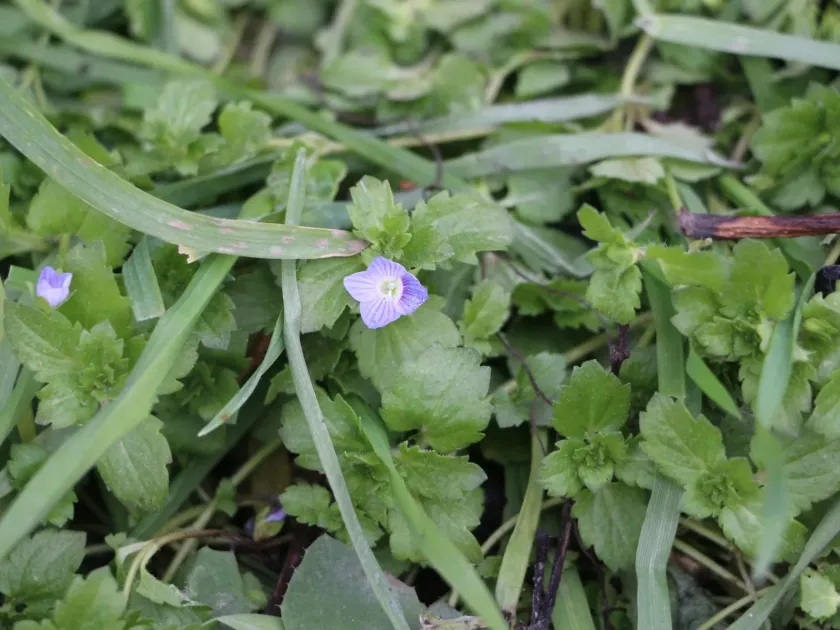
Description
Sowing dates
Persian speedwell is an annual weed that functions as either a winter or spring ephemeral, with peak seed germination occurring during the autumn months. Seedlings emerge at soil temperatures between +2 and +5 degrees Celsius, allowing the plant to successfully overwinter as a rosette.
Spring growth initiates very early, immediately after snowmelt, creating intense competition with crops during their critical establishment phase. Seeds are capable of remaining viable in the soil seed bank for several years, ensuring consistent population renewal.
Flowering occurs from March through September, with a single plant capable of producing several thousand seeds per season. This prolific reproduction makes the weed difficult to eradicate without timely field management during the early spring period.
Control strategies involve both mechanical cultivation and the use of pre-emergence soil herbicides. The efficacy of these measures depends heavily on the growth stage of the weed, as mature plants exhibit higher resistance to chemical applications.
Crop rotation serves as a primary tool for limiting the spread of Persian speedwell. Alternating winter and spring crops, combined with intensive fall tillage, significantly reduces the seed bank stored within the topsoil layer.
Growing requirements
Belonging to the Plantaginaceae family, the plant prefers fertile, moist, and loose soils with high nitrogen content. It frequently colonizes cereal crops, row crops, and perennial grasses, rapidly filling any available space within the field.
Persian speedwell is highly demanding regarding light and moisture, often dominating in crops with sparse stands. While it can withstand moderate shading, it achieves maximum biomass accumulation in open, well-warmed areas.
The optimal soil pH for active growth ranges from slightly acidic to neutral. In heavily compacted or waterlogged soils, the plant shows reduced vigor, allowing agronomists to use soil structure as a natural management factor.
The climatic plasticity of this species allows it to successfully colonize territories across almost all temperate zones. In regions with mild winters, the plant retains its green foliage, continuing vegetative development even during periods of minimal positive temperatures.
The species possesses high adaptability to various agronomic practices, necessitating a comprehensive approach to crop protection. Regular cleaning of seed stock is a vital prerequisite to prevent the primary introduction of the weed into new fields.
Main diseases and pests
Persian speedwell acts as a reservoir for various pathogens that threaten commercial crops. It often serves as an intermediate host for several species of powdery mildew and rust, facilitating their spread to nearby cultivated plants.
Pests that parasitize this weed, including aphids and nematodes, can easily migrate to agricultural crops. This poses a significant threat regarding the emergence of infestation hotspots in the vicinity of fields.
Diseases affecting Persian speedwell include fungal infections like downy mildew, which can spread to vegetable crops under favorable conditions. Timely removal of weeds along field borders is critical for maintaining phytosanitary standards.
Chemical control requires the use of broad-spectrum herbicides, as the plant demonstrates resistance to certain types of active ingredients. Adhering to application regulations is essential to minimize phytotoxicity to the primary crop.
Biological control methods are currently underdeveloped, making the combination of mechanical weeding and chemical treatments the primary strategy. Preventive field hygiene remains the most effective defense against this invasive weed.