
Blue water speedwell
Veronica anagallis-aquatica L.
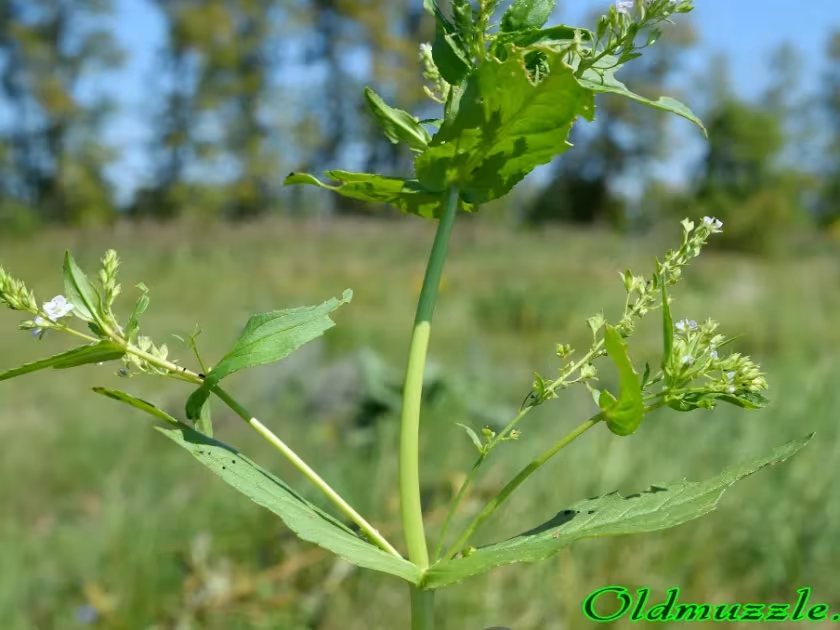
Description
Growing requirements
Blue water speedwell (Veronica anagallis-aquatica L.) is a member of the Plantaginaceae family. It is a perennial herbaceous plant recognized as a typical hydrophyte, thriving in environments with high water levels.
The plant is commonly found along the margins of streams, rivers, ditches, and wetlands. It prefers nutrient-rich, silt-laden soils and is highly adaptable to both slow-moving and stagnant water conditions across various temperate regions.
This species requires high light intensity for optimal growth but can withstand partial shading in natural riparian ecosystems. It thrives in neutral to slightly alkaline soil conditions where the water table is persistently high.
Ecologically, the plant plays a significant role in stabilizing stream banks through its root system. Its ability to propagate vegetatively makes it a dominant species in wet meadow habitats and marshy agricultural land bordering drainage systems.
Morphologically, it features hollow, succulent stems and lanceolate-shaped leaves. Its inflorescences consist of small, light blue or pinkish-white flowers that appear during the peak growing season, attracting various pollinators.
Main diseases and pests
The plant is primarily susceptible to fungal diseases such as powdery mildew, especially during periods of high humidity and poor air circulation. These infections can severely impact the photosynthetic capacity of the foliage.
Pests such as aphids and spider mites are frequent threats, targeting the succulent tissues of the stem and the undersides of the leaves. Infestations often occur in stressed plants growing in shallow or polluted water bodies.
Leaf beetles and their larvae pose a secondary threat by consuming leaf tissue, leading to stunted growth. In dense populations, this damage can lead to premature decay of the stem, which reduces the plant's overall competitive ability.
Water quality parameters significantly influence the susceptibility of blue water speedwell to environmental pathogens. High concentrations of pollutants can weaken the plant's natural defense mechanisms, increasing the risk of infection.
Management of the species in agricultural settings often involves drainage improvements and periodic vegetation clearing. By altering the moisture content of the soil, land managers can effectively control its spread and mitigate disease risks.