
Green field-speedwell
Veronica agrestis L.
Description
Growing requirements
Green field-speedwell (Veronica agrestis L.) is an annual herbaceous plant belonging to the Plantaginaceae family. Known as a widespread weed in temperate regions, it commonly appears in arable fields, gardens, and along roadsides, significantly competing with cultivated crops.
Originating from Europe and Western Asia, the species has a broad distribution and thrives in various climatic conditions. It is particularly successful in areas where agricultural practices involve frequent soil disturbance, as it relies on open, exposed soil for seedling establishment.
Regarding environmental requirements, this weed prefers moist, fertile, and nutrient-rich soils. While it can survive on various soil types, it shows maximum growth potential on well-drained loams where moisture levels are consistently high, especially during the spring season.
Effective agrotechnical management requires a combination of mechanical weeding and chemical control. Since the seeds can remain viable in the soil seed bank for several years, crop rotation and the use of competitive cultivars are essential strategies to suppress the population density.
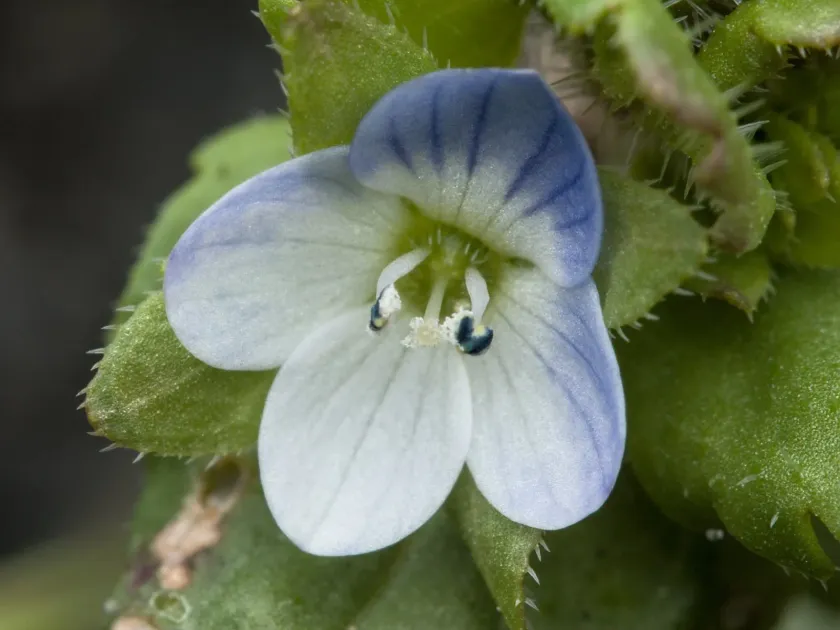
Botanically, Veronica agrestis is recognized by its prostrate, branching stems and small, light blue to whitish solitary flowers. The plant exhibits a high reproductive rate, producing hundreds of seeds per individual, which facilitates rapid colonization of empty field spaces.
Main diseases and pests
The primary threat associated with this plant is its role as an alternative host for various crop pathogens. Several fungi, including species that cause leaf spot and rust, utilize the foliage of green field-speedwell to complete their life cycles before attacking the main crops.
Major pests including aphids and spider mites are frequently observed on this weed. These pests exploit the dense foliage of the speedwell to increase their population levels before migrating to cash crops, thereby increasing the economic threshold for insecticidal applications in the field.