
Veronica pinguifolia
Veronica pinguifolia Hook. f.
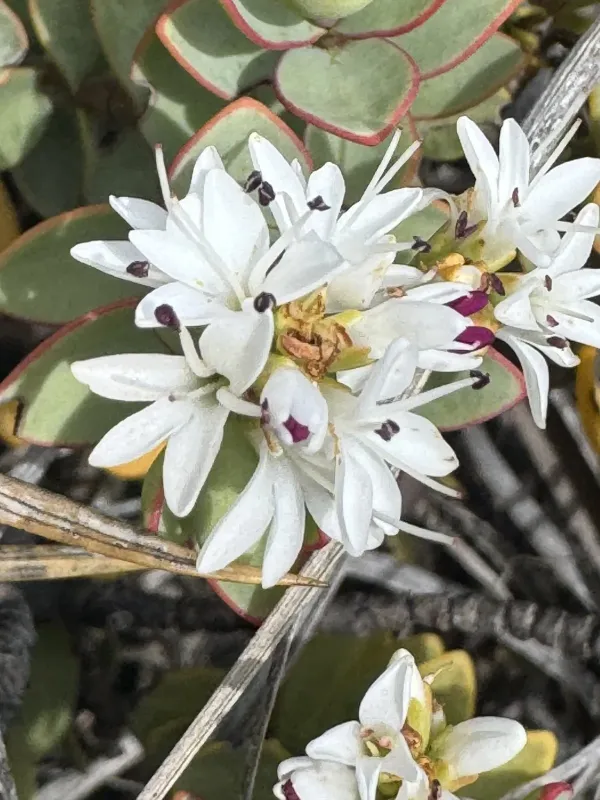
Description
Growing requirements
Veronica pinguifolia, commonly known as the fat-leaved speedwell, is a hardy evergreen shrub belonging to the Plantaginaceae family. It is native to the mountainous regions of New Zealand, where it thrives in rocky, alpine terrain.
The plant is highly valued for its compact growth habit and fleshy, glaucous leaves. To cultivate it successfully, you must provide excellent drainage. It performs best in gritty, free-draining soil that mimics its natural habitat.
Full sun is essential for this species to maintain its dense, cushion-like structure. While it can tolerate partial shade, insufficient light will often lead to leggy growth and a loss of the characteristic foliage coloration.
In terms of climate, it is remarkably cold-hardy, although it requires protection from persistent winter wetness. Providing a gravel mulch around the base of the plant can help prevent the collar from rotting during rainy months.
Care requirements are relatively low. Once established, it is drought-tolerant and requires little supplementary feeding. Light pruning after flowering can help maintain the desired shape and promote bushy, healthy growth for the following season.
Main diseases and pests
The most significant threat to Veronica pinguifolia is the presence of fungal pathogens, particularly root rot, which is almost always a result of waterlogged soil or poor drainage conditions in the garden.
Leaf spot diseases can also occur, especially in stagnant or humid environments where air circulation is limited. Ensuring the plant is spaced correctly from neighbors is a key preventative measure against these issues.
Pests such as aphids may occasionally colonize the soft, new growth in late spring. These are typically managed through simple mechanical removal or the application of insecticidal soaps if an infestation occurs.
Slugs and snails can be problematic for younger plants, particularly in wet spring conditions, as they may graze on the fleshy foliage, potentially causing both cosmetic damage and entry points for infections.
Maintaining a clean growing area and avoiding overhead watering during evening hours can significantly reduce the risk of common diseases. Regular monitoring ensures early detection of any health decline in the plant.