
Veronica pimeleoides
Veronica pimeleoides Hook. f.
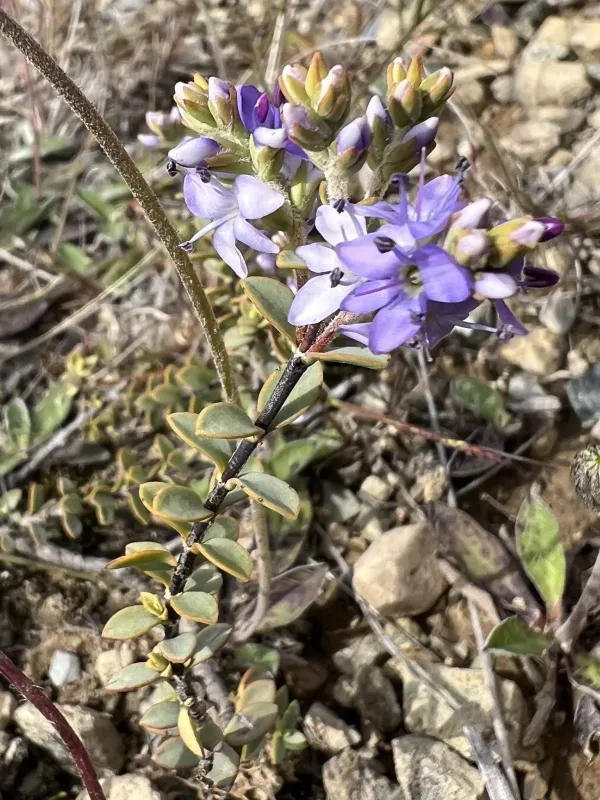
Description
Growing requirements
Veronica pimeleoides is a member of the Plantaginaceae family. This low-growing evergreen subshrub is native to the mountainous regions of New Zealand, where it thrives in exposed, rocky habitats.
The plant is distinguished by its small, opposite, grey-green or glaucous leaves that densely cover the stems. During the summer flowering period, the plant produces numerous violet-blue flowers arranged in terminal, spike-like racemes.
For optimal growth, the crop requires a sunny location with plenty of direct light. Due to its compact habit and slow growth rate, it is an excellent choice for rock gardens, alpine troughs, and decorative border plantings.
Soil requirements focus on excellent drainage. Veronica pimeleoides does not tolerate waterlogging in the root zone, so on heavy clay soils, it is essential to incorporate gravel or grit to improve aeration and moisture control.
The plant exhibits moderate cold hardiness. In regions with severe winters, it requires winter protection or is best grown in containers, allowing it to be moved to a cool, frost-free area during the dormant season.
Main diseases and pests
The primary threats to Veronica pimeleoides are related to poor moisture management. Overwatering or lack of proper drainage leads to root rot, which is often fatal if not addressed immediately.
Among pests, sucking insects such as aphids and spider mites pose the most significant risk. If an infestation is detected, prompt treatment with systemic insecticides or acaricides is recommended to prevent damage.
High humidity levels can encourage the development of powdery mildew on the foliage. Preventive treatments with copper or sulfur-based fungicides at the beginning of the growing season are effective in mitigating fungal issues.
Maintaining adequate air circulation around the plant is crucial. Avoid overcrowding in garden beds, as poor airflow creates a microclimate that promotes fungal spore germination and disease spread.
Regular maintenance, including the pruning of spent flower stalks, is an essential agricultural practice. This not only preserves the aesthetic appeal of the plant but also removes potential sites for pathogen colonization.