
Vernonanthura nudiflora
Vernonanthura nudiflora
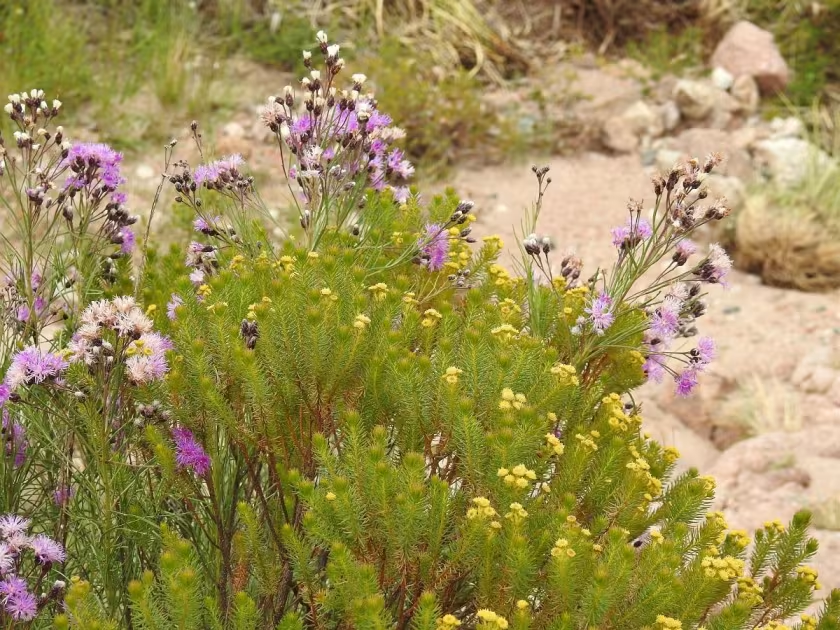
Description
Growing requirements
Vernonanthura nudiflora is a perennial shrub-like plant that belongs to the Asteraceae family. It is native to South America, primarily documented in regions across Brazil, Argentina, and Paraguay, where it thrives in diverse subtropical habitats.
The plant exhibits distinct botanical characteristics, featuring robust stems and complex inflorescences typical of the Asteraceae family. Its biological cycle is adapted to variable precipitation, utilizing a deep-reaching root system to maintain hydration during dry seasons.
Regarding soil requirements, this species favors well-drained, fertile substrates. While it displays resilience on marginal lands, optimal biomass production is achieved in soils with neutral to slightly acidic pH levels that prevent water stagnation.
Agricultural management should focus on maximizing light exposure, as Vernonanthura nudiflora is a heliophilic plant. Planting densities should be adjusted to minimize competition for sunlight, ensuring each plant has sufficient space to develop its full architectural structure.
Economic uses of the species are multifaceted. It is widely recognized by beekeepers as a valuable honey plant during its flowering period. Additionally, recent research highlights the plant's phytochemical profile, suggesting potential applications in both agricultural feed additives and the pharmaceutical sector.