
Vachellia xanthophloea
Vachellia xanthophloea
Description
Growing requirements
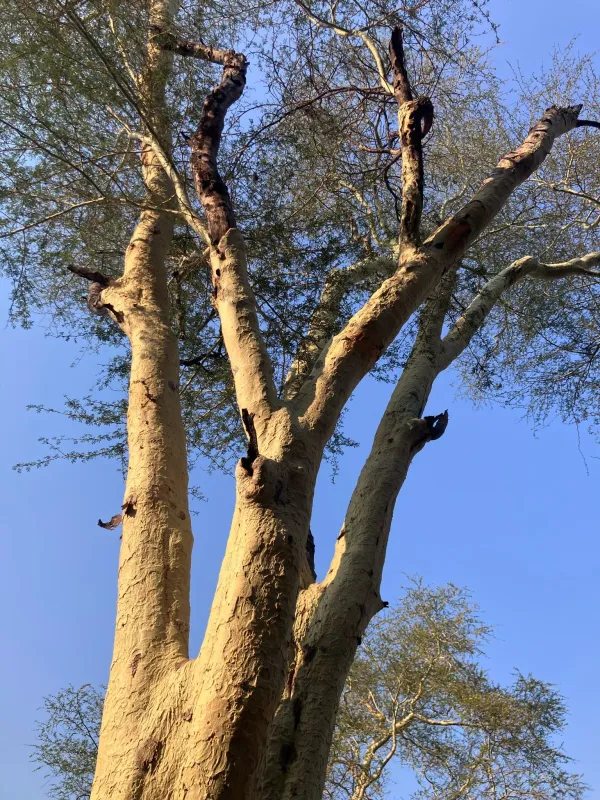
Vachellia xanthophloea is a prominent member of the Fabaceae family, widely recognized for its striking sulfur-yellow bark. This unique feature gives the tree its common name, the fever tree, due to its historical association with swampy habitats where malaria was prevalent.
Originating in Eastern and Southern Africa, this species thrives in riparian zones and high-water-table areas. Its natural distribution is closely linked to its specific requirements for high soil moisture and warm tropical climate conditions.
Cultivation demands full sun exposure to ensure the healthy development of its canopy. The species is highly sensitive to frost, which limits its outdoor production to warm, frost-free regions or protected botanical environments.
Regarding soil, Vachellia xanthophloea prefers rich, deep, and well-drained substrates. While it tolerates periodic waterlogging in its native habitat, agricultural plots require adequate drainage to prevent root rot in controlled environments.
The tree serves various economic and ecological purposes, including large-scale landscape architecture, agroforestry, and the production of quality wood. It is also an important nectar source for pollinators, contributing to biodiversity in its range.
Main diseases and pests
Fungal diseases related to excessive soil moisture represent a primary threat. Maintaining proper airflow around the root collar is essential to prevent root decay and ensure the longevity of the tree specimens.
Insect pests, specifically wood-boring beetles, can pose a risk to the health of the trunk and branches. Integrated pest management strategies are recommended to monitor for early signs of infestation and prevent structural damage.
Young plants are particularly vulnerable to grazing by local herbivores. In agricultural settings, it is necessary to implement protective fencing until the tree has developed sufficient bark thickness to withstand external pressure.
Nutritional deficiencies may occur if the soil pH is not well-regulated, affecting the tree's ability to fix nitrogen efficiently. Periodic soil testing ensures that the nutrient balance supports optimal growth rates.
Viral or bacterial infections are less common but can occur if pruning tools are not properly disinfected. Clean agricultural practices are crucial to avoid spreading pathogens between trees in a plantation setting.