
Vachellia astringens
Vachellia astringens
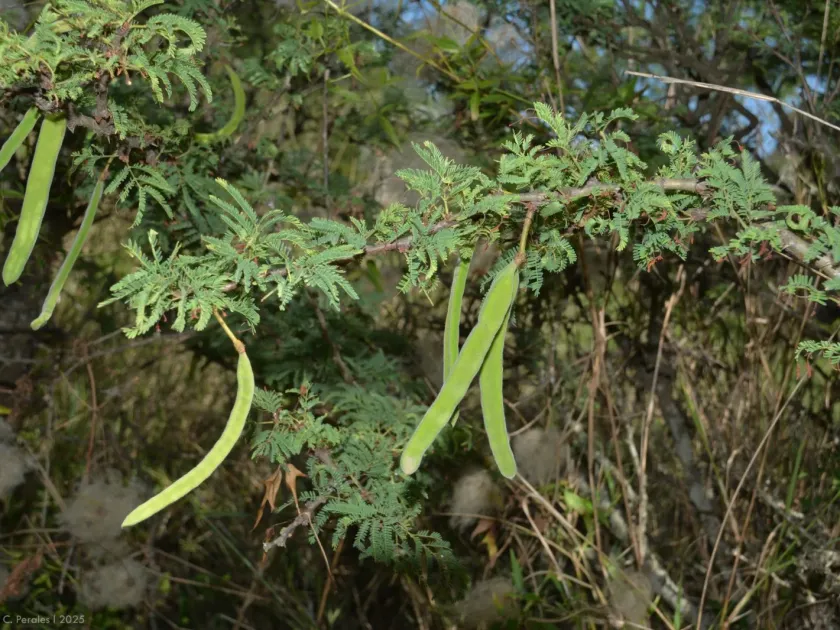
Description
Growing requirements
Vachellia astringens is a woody plant belonging to the Fabaceae family, well-adapted to harsh environmental conditions. As a xerophytic species, it is highly efficient at managing water resources, making it a suitable candidate for arid agricultural zones.
Native to the arid regions of Southern Africa, this plant has evolved to thrive in rocky and nutrient-poor soils where typical crops fail to establish. Its survival strategy involves deep root penetration and specialized metabolic pathways.
Botanically, it typically appears as a dense shrub or a small tree featuring pinnate leaves and protective thorns. These structural features minimize transpiration losses, allowing the plant to remain green even during prolonged dry spells.
The cultivation of this species requires well-drained, sandy, or rocky soil conditions. Waterlogging is the primary cause of failure, as the root system is highly sensitive to hypoxia and fungal rot when exposed to excessive moisture.
A climate with distinct dry seasons and high solar radiation is ideal for Vachellia astringens. It requires full exposure to sunlight to maintain its structural integrity and reach its maximum potential for biomass production.
Yield
The primary economic value of Vachellia astringens lies in its bark and fruit, which are rich in high-quality tannins. These compounds are extensively utilized in the leather industry for tanning processes, providing a sustainable source of raw materials.
Beyond tannin production, the species serves as a valuable forage resource. Its foliage and pods provide essential nutrition for livestock in regions where grazing opportunities are otherwise severely limited by seasonal drought.
The wood of Vachellia astringens is noted for its exceptional density and durability. It is frequently used for crafting durable agricultural implements, fencing, and as a high-heat energy source for rural domestic use.
As a nitrogen-fixing legume, the plant significantly contributes to the sustainability of the agricultural ecosystem. It improves soil structure and nutrient content, benefiting the surrounding vegetation and maintaining soil stability.
Harvesting strategies are usually based on sustainable management of the tree population. By carefully managing the bark stripping cycles, landowners can maintain productive stands for several decades without environmental degradation.
Main diseases and pests
The most significant threats to the health of this culture include root rot pathogens that proliferate in poorly drained soils. Preventing soil saturation is the most effective preventative measure against such diseases.
Pest populations, including borers and seed-feeding weevils, can cause considerable economic loss. Monitoring these insects is crucial during the flowering and fruit-set stages to prevent a substantial decrease in yield quality.
Mechanical damage to the bark serves as an entry point for opportunistic pathogens. Care should be taken during any maintenance activities or pruning to avoid unnecessary wounding of the trunk and primary branches.
Weed competition represents a major challenge during the early establishment phase of the plant. Frequent clearing of the soil surface around the base of the plant is recommended to ensure that the seedling receives adequate nutrients and water.
Integrated pest management (IPM) practices, including the use of pheromone traps for beetle monitoring, are recommended to maintain healthy stands while minimizing the use of synthetic chemical inputs in the ecosystem.