
Vachellia tortuosa
Vachellia tortuosa
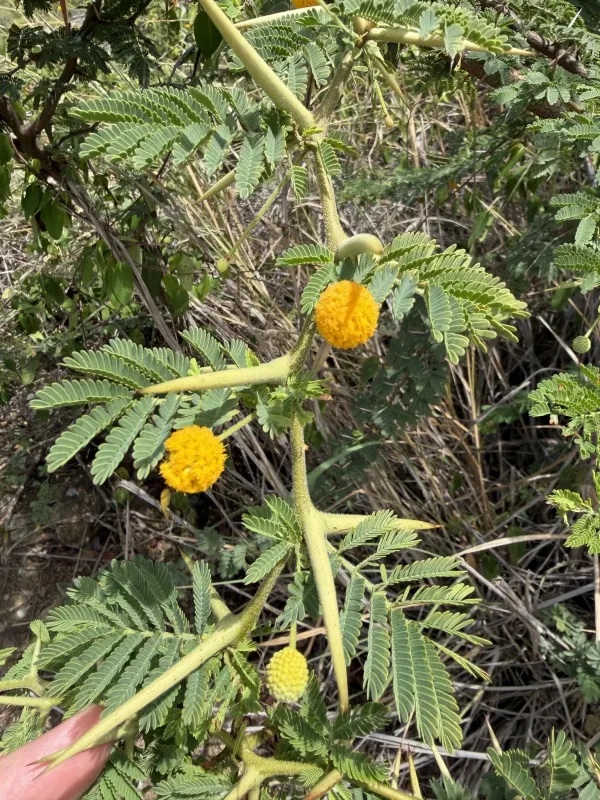
Description
Growing requirements
Vachellia tortuosa is a perennial woody plant belonging to the Fabaceae family, native to tropical and subtropical regions of the Americas.
The crop is highly valued for its extreme drought tolerance, allowing it to thrive in arid environments where other species fail to survive.
It prefers well-drained sandy or rocky soil types, showing remarkable adaptability to low-fertility soils common in semi-arid zones.
Optimal growth is achieved in areas with direct sunlight, as the plant is heliophilic and requires high light intensity for healthy development.
As a legume, Vachellia tortuosa enriches the soil by fixing atmospheric nitrogen, a process that significantly enhances the fertility of the surrounding agricultural land.
Yield
The primary agricultural application of this species is in livestock farming, where its leaves and pods serve as a nutritious forage source during the dry season.
The timber obtained from the plant is known for its hardness and durability, making it an excellent source for local firewood and high-quality charcoal production.
Vachellia tortuosa is also an essential nectar-producing plant, supporting local apiaries by providing a steady food source for honeybees during the summer months.
In conservation efforts, the plant is frequently used as a living hedge to stabilize soil and mitigate wind erosion on rural agricultural fields.
The plant demonstrates high biomass productivity even in harsh climate conditions, making it a reliable resource for sustainable land management.
Main diseases and pests
Seed-feeding beetles from the Bruchidae family are among the most common pests that can affect seed viability and overall plant reproduction rates.
Leaf-feeding insects may pose a challenge during the seedling phase, potentially retarding early growth if infestations are left unchecked.
Fungal pathogens associated with root rot can occur in instances where soil drainage is inadequate or waterlogging is persistent.
Effective disease management relies on selecting appropriate planting sites and ensuring proper air circulation within the plantation rows.
Regular monitoring and integrated pest management practices are essential to maintain the health and productivity of the cultivated trees over time.