
Vachellia tortilis
Vachellia tortilis
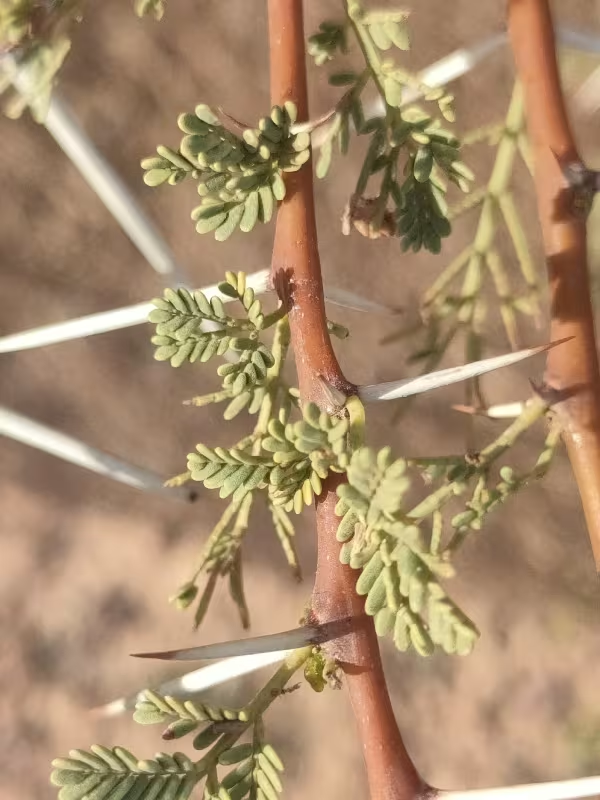
Description
Growing requirements
Vachellia tortilis, commonly known as the umbrella thorn acacia, is a prominent member of the Fabaceae family, highly specialized for survival in semi-arid and arid landscapes.
This tree exhibits exceptional drought tolerance due to a dual-root system that includes a shallow lateral network for capturing surface water and a deep taproot to reach moisture reservoirs.
It performs best in well-drained, sandy, or rocky soils, although it shows remarkable flexibility regarding pH levels, growing successfully in both alkaline and slightly saline environments.
The culture requires high solar radiation and thrives in temperatures exceeding 30-40 degrees Celsius, making it unsuitable for frost-prone or temperate climatic zones.
Proper agricultural management involves ensuring adequate space between individuals to reduce competition for subsoil water, as high stand density can stunt growth rates.
Yield
The primary agricultural utility of Vachellia tortilis lies in its role as a high-protein fodder source for livestock, especially in areas where grasses fail to persist during the dry season.
The foliage, pods, and flowers are rich in nutrients, providing a sustainable feeding solution for camels, goats, and cattle in harsh desert ecosystems.
Beyond animal nutrition, the species is essential for soil restoration, as it fixes atmospheric nitrogen, improving the fertility of nutrient-poor soils for associated crops.
Wood production remains a significant economic factor, with the timber being utilized for durable fencing, rural construction, and the production of high-quality charcoal.
Sustainable harvesting of branches for fodder is practiced by local communities, ensuring the tree remains productive while preventing over-harvesting that could lead to mortality.
Main diseases and pests
Seed-feeding bruchid beetles represent the most significant biological threat, often destroying a large percentage of potential seed output before the pods even reach maturity.
Fungal infections, typically triggered by poor drainage and waterlogging, can cause root rot, which is a major concern when attempting to cultivate the tree in low-lying areas.
Herbivory by browsing wildlife and domestic livestock often prevents natural regeneration, necessitating protective enclosures for young saplings until they are tall enough to survive.
Parasitic plants such as Loranthaceae species can colonize the crown, causing structural weakness and reducing the photosynthetic efficiency of the tree canopy.
Control strategies involve integrated pest management focusing on seed protection and manual removal of parasitic plants to maintain long-term plantation health.