
Vachellia tomentosa
Vachellia tomentosa
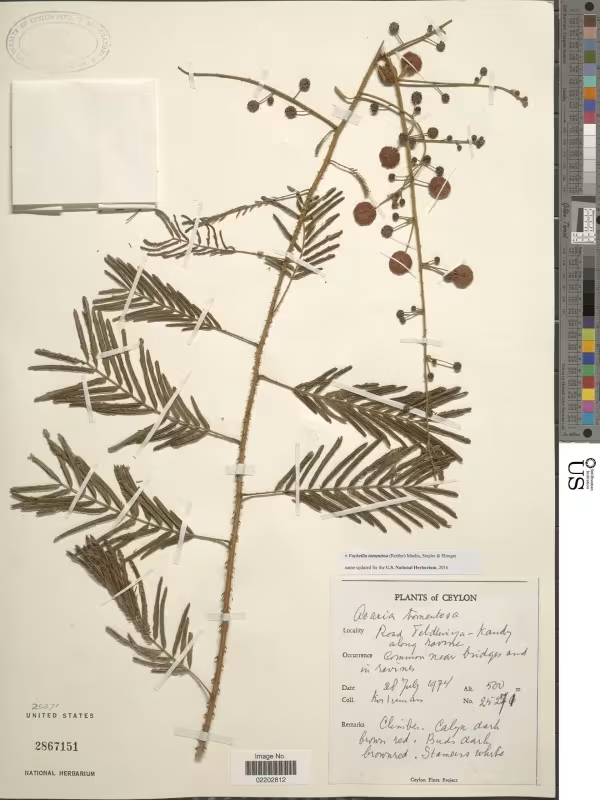
Description
Growing requirements
Vachellia tomentosa is a prominent member of the Fabaceae family, known for its resilience and adaptability. Originating from tropical and subtropical regions of Asia, it has historically played a vital role in local agricultural and pastoral systems.
The plant thrives in arid and semi-arid climates, demonstrating exceptional drought tolerance. It is highly suited for regions with intense solar radiation and limited precipitation, where other crop species often fail to survive.
Soil requirements for this species are minimal. It performs well in poor, rocky, or sandy substrates, often acting as a pioneer species that improves soil structure and nitrogen content through its symbiotic nitrogen-fixing ability.
For successful cultivation, excellent drainage is essential. While Vachellia tomentosa loves sun, it is highly sensitive to waterlogged conditions, which can lead to rapid root decay and plant decline.
Economically, the species is valued for its wood production, charcoal manufacturing, and as a forage source for livestock during the dry season. Its nitrogen-fixing capabilities make it a preferred candidate for agroforestry and land restoration projects.
Main diseases and pests
The most significant threat to Vachellia tomentosa is root rot, typically caused by poorly drained soils or excessive irrigation. Maintaining optimal soil moisture levels is critical to prevent fungal development at the base of the plant.
Seed-boring insects, particularly bruchid beetles, pose a major risk to seed viability. These pests can infest the pods, significantly reducing the success rate of propagation from seeds if not treated properly.
Young seedlings are often targeted by grazing animals. Providing physical protection during the establishment phase is necessary to ensure the plants reach a mature, resilient stage where they can survive browsing.
Competition from aggressive invasive weeds can suppress the growth of young plants in the nursery stage. Regular mechanical weeding is recommended to ensure the plant has sufficient light and nutrients.
Despite these challenges, Vachellia tomentosa is inherently robust. With proper site selection and minimal management, it rarely requires chemical intervention, making it a sustainable choice for resource-limited farming.