
Vachellia seyal
Vachellia seyal
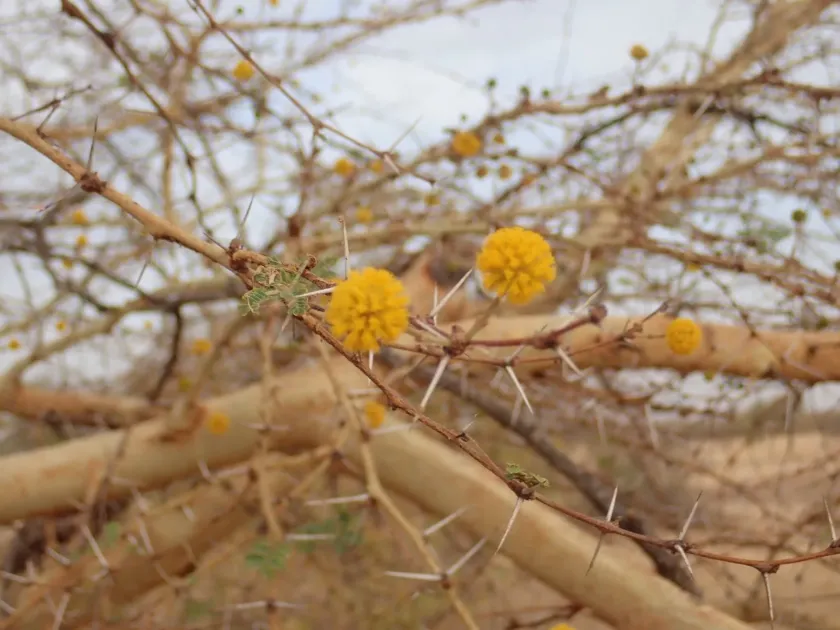
Description
Growing requirements
Vachellia seyal, commonly referred to as the red acacia or shittah tree, belongs to the Fabaceae family. It is a prominent tree species naturally occurring throughout the Sahelian region of Africa, perfectly adapted to hot and arid environments.
The species is highly resilient, capable of thriving in areas with low annual rainfall. It is particularly noted for its ability to grow in heavy clay soils that are prone to seasonal waterlogging, a rare trait among many acacia species.
Vachellia seyal requires high light levels and is intolerant of shade. Proper spacing is essential in plantation management to ensure each tree receives optimal solar exposure for photosynthesis and growth.
The climate requirements for this species involve broad temperature ranges, typically between 20°C and 40°C. Its deep taproot system allows it to reach underground water tables, ensuring survival during severe drought periods.
This tree acts as a soil improver by fixing atmospheric nitrogen, which enhances soil fertility. This makes it a critical component of restoration ecology and sustainable farming systems in dryland regions.
Yield
The primary economic output of Vachellia seyal is the production of gum, specifically a variant of gum arabic. This exudate is harvested during the dry season and is widely used in the food, beverage, and pharmaceutical industries.
The wood of the red acacia is highly valued for its density and high calorific value. It is commonly used for domestic fuel and in the production of high-quality charcoal, which provides a consistent energy source.
Fodder availability is a significant benefit of this species. Its leaves and pods provide a crucial source of protein for livestock, particularly goats, sheep, and camels, during the dry season when other forage is scarce.
The yield of gum depends on the maturity of the tree, usually starting after the fifth year of growth. Sustainable tapping methods are essential to ensure the longevity of the tree and consistent yields over decades.
Integrated agroforestry systems allow farmers to generate diversified income by combining timber, fodder, and non-timber forest products, contributing to rural food security and economic stability.
Main diseases and pests
Insect pests, such as seed-boring beetles, are the primary biological threat. These insects can significantly reduce the success of natural regeneration by destroying a large portion of the seed crop.
Fungal pathogens represent a major health risk to the tree, especially following mechanical damage to the bark during gum tapping. Proper training of harvesters is required to minimize long-term damage to the tree's vascular system.
Overgrazing by livestock is a major environmental threat to saplings. Without adequate protection or fencing, young trees are frequently consumed or trampled, hindering the establishment of new stands.
Wildfires are a constant danger during the peak of the dry season. The accumulation of dry grass in the understory provides fuel for fires that can rapidly devastate even large stands of trees if not controlled.
Climatic instability, such as erratic rainfall patterns and increased desertification, can stress the trees, leading to lower metabolic activity and a decrease in both growth rates and gum production volumes.