
Vachellia nebrownii
Vachellia nebrownii
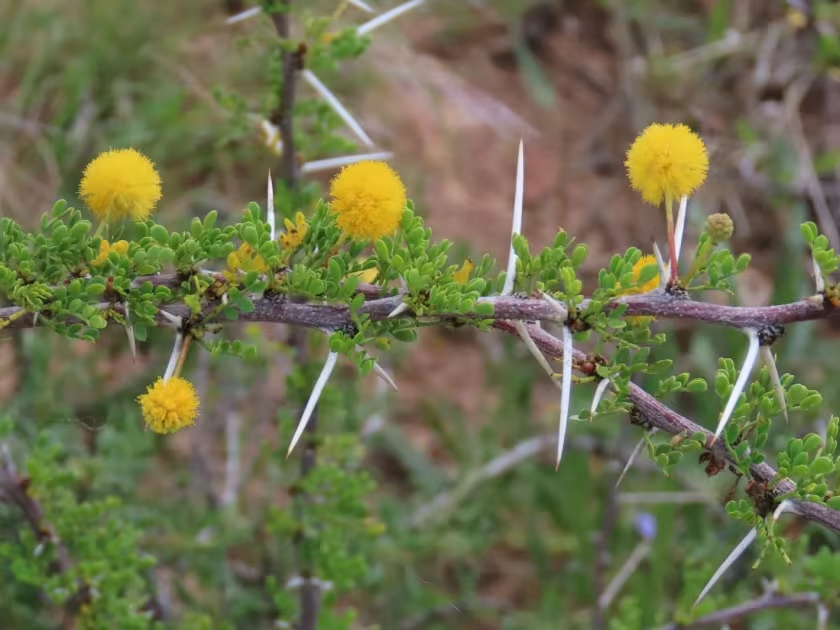
Description
Growing requirements
Vachellia nebrownii is a woody shrub or small tree belonging to the Fabaceae (Legume) family. Native to the arid landscapes of Southern Africa, particularly Namibia and Botswana, it is highly specialized for survival in extreme environmental conditions.
The plant is characterized by a dense, thorny structure that effectively minimizes water loss through transpiration. Its ability to thrive in poor, rocky, or saline soils makes it a significant species for agricultural development in desert and semi-desert regions.
Optimal growth requires high solar radiation and well-drained soils. Unlike many traditional crops, Vachellia nebrownii does not require irrigation, relying entirely on its deep taproot system to access subterranean moisture during prolonged dry seasons.
Agricultural management is relatively simple, focusing primarily on protecting young seedlings from browsing animals. Once established, the plants demonstrate high resilience to extreme temperature fluctuations and require no fertilization due to their nitrogen-fixing capabilities.
Biological resilience is a key feature of this species. It can withstand long-term water stress while maintaining a structural presence, which is essential for stabilizing shifting sands and preventing wind erosion in fragile ecosystems.
Yield
The primary agricultural use of Vachellia nebrownii is as a browse plant for livestock. During drought periods, its foliage and pods provide critical protein-rich nutrition for goats and game animals when herbaceous forage is depleted.
The wood is highly valued for its durability and hardness. It is frequently utilized in local farming for constructing livestock enclosures, permanent fences, and shelters, serving as an economical and sustainable building material.
Vachellia nebrownii serves as an ecological anchor in arid lands. By enriching the soil through biological nitrogen fixation and leaf litter decomposition, it creates micro-habitats that foster the growth of surrounding vegetation.
In landscaping, the plant is often employed as a natural security barrier. Its formidable thorns provide an effective deterrent against unauthorized entry, making it an ideal choice for perimeter protection on rural agricultural properties.
Sustainable harvesting of the woody material allows for regular use without exhausting the natural stand. Managed properly, Vachellia nebrownii populations can serve as a long-term resource for rural communities in water-stressed environments.