
Vachellia luederitzii
Vachellia luederitzii
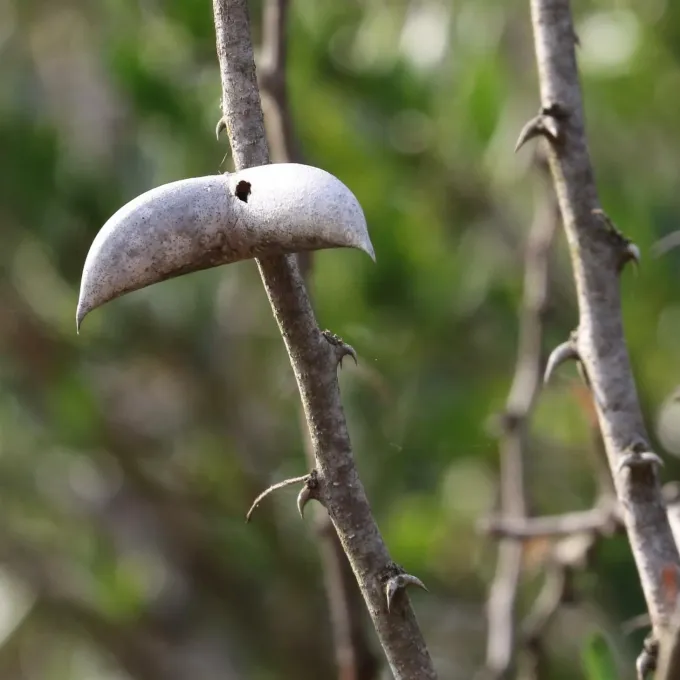
Description
Growing requirements
Vachellia luederitzii is a tree species belonging to the Fabaceae family, native to the arid and semi-arid regions of Southern Africa. This resilient species is well-adapted to harsh environmental conditions, including extreme heat and irregular rainfall patterns.
The plant thrives in well-drained, sandy or rocky soils, showcasing remarkable adaptability to nutrient-poor substrates. As a legume, it fixes nitrogen, playing a vital role in soil enrichment within its natural habitat and managed agroforestry systems.
Optimal growth requires high levels of solar exposure. Its physiological mechanisms allow it to endure long-term drought by utilizing deep-reaching taproots, which makes it an excellent choice for reclamation projects in arid landscapes.
Cultivation practices focus on ensuring initial survival by protecting saplings from excessive moisture and fungal pathogens. Once established, the tree requires virtually no human intervention, making it a low-maintenance agricultural component.
Economically, the tree is highly valued for its durable and hard wood, which is resistant to termite attacks. It also serves as a crucial fodder source for both livestock and wild game, providing essential nutrients during the dry season when other forage is scarce.
Main diseases and pests
The primary biological threats involve seed-boring insects, which can significantly compromise the viability of seeds. This predation pressure is a significant challenge for natural regeneration and propagation efforts.
Pathogenic fungi can also affect the tree, particularly in environments with higher than average humidity or stagnant groundwater. Preventing root rot and stem infections is essential for maintaining healthy stands in agricultural or reforestation settings.