
Vachellia lahai
Vachellia lahai
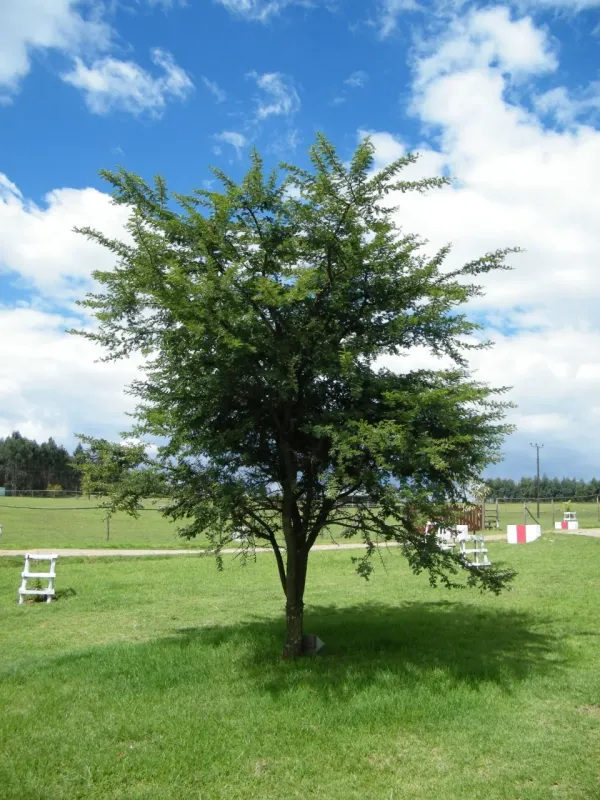
Description
Growing requirements
Vachellia lahai is a prominent tree species belonging to the Fabaceae family, native to the highlands of Ethiopia and parts of East Africa. It is characterized by its umbrella-shaped canopy, which is a structural adaptation common in savannah ecosystems.
The tree thrives in regions with distinct wet and dry seasons, demonstrating exceptional hardiness in semi-arid environments. It is well-suited for high-altitude planting, where it survives significant diurnal temperature fluctuations with ease.
Regarding soil requirements, Vachellia lahai prefers well-drained, porous soils that prevent waterlogging. While it can adapt to various soil types, it performs best in mineral-rich substrates that allow its deep taproot system to access groundwater.
Agricultural management of this species involves seed pretreatment, as the seeds possess a hard, impermeable seed coat. Scarification is usually necessary to break dormancy and ensure uniform germination across the field.
Young plants are highly susceptible to herbivory, particularly from livestock and wild grazers. Implementing protective measures during the establishment phase is essential for the long-term success of any Vachellia lahai plantation.
Yield
The wood of Vachellia lahai is highly valued for its durability and structural integrity. It is widely used in traditional carpentry, for constructing farm buildings, and for making various household and agricultural tools.
As a leguminous plant, it plays a vital role in soil fertility through nitrogen fixation. By integrating this tree into farming systems, land managers can naturally improve the nutrient levels of the soil for associated crop plants.
The foliage serves as an essential protein-rich fodder for goats and sheep, especially during the dry season when ground-level vegetation is scarce. This makes the species an important asset for pastoral communities.
The bark of the tree is rich in tannins, which are extracted for use in the leather tanning industry. This secondary product adds significant economic value to the cultivation of the species in traditional rural economies.
Beyond its direct utility, Vachellia lahai acts as a protective windbreak and erosion control agent. Its presence helps stabilize soil on hillsides, thereby protecting valuable agricultural land from degradation and desertification.