
Vachellia horrida
Vachellia horrida
Description
Growing requirements
Vachellia horrida, commonly known as the umbrella thorn acacia, is a perennial tree species belonging to the Fabaceae family. In its natural habitat, the tree can reach heights of up to 7 meters, possessing an extensive root system adapted for harsh arid conditions.
Native to the arid regions of Southern Africa, this species has evolved to withstand extreme temperatures and prolonged drought. It is highly valued for its ability to thrive in degraded soils where other vegetation often fails to establish.
The crop is undemanding regarding soil fertility, successfully growing in rocky, sandy, or saline ground conditions. Good drainage is essential, as the species is highly susceptible to root rot if the soil remains waterlogged for extended periods.
Vachellia requires intense sunlight for optimal development, as it is a strictly heliophilic species. In shaded areas, the growth rate declines significantly, and the tree may lose its characteristic structural integrity and crown density.
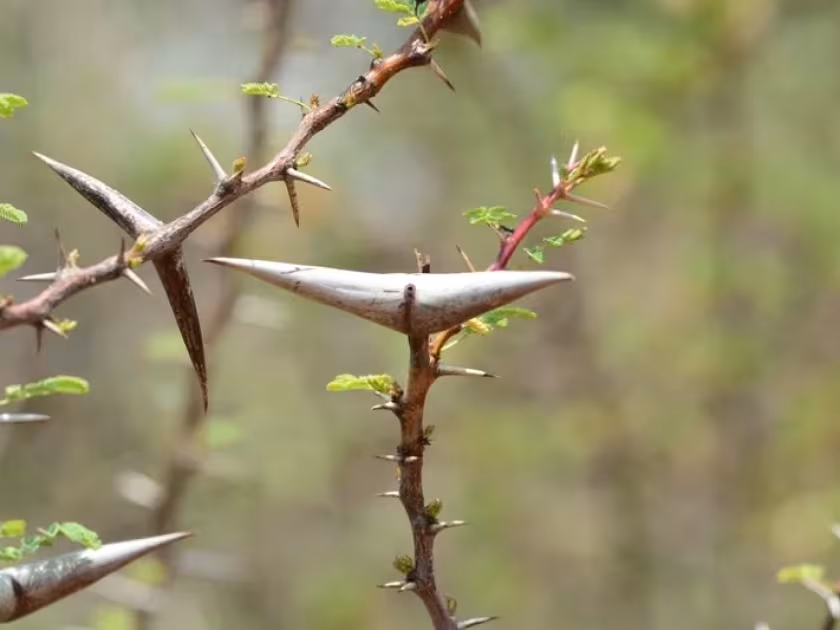
In agricultural practice, it is widely used for creating protective hedges. Its long, sharp thorns act as a natural, highly effective barrier against livestock and wildlife, protecting more sensitive agricultural crops from intrusion.
Yield
The productivity of Vachellia horrida is measured by its biomass output and ecological contribution. As a nitrogen-fixing legume, it plays a vital role in restoring soil nutrients and improving the fertility of nutrient-poor landscapes.
The seeds of the tree provide a protein-rich feed supplement for small ruminants during the dry season when forage is scarce. The leaf litter contributes significantly to the build-up of organic matter in the soil surface layers.
When used as shelterbelts, the tree serves as an efficient windbreak, reducing wind erosion. The yield of timber is determined by the planting density and the implementation of systematic pruning to encourage the formation of straight, harvestable trunks.
Harvesting seeds involves collecting dried pods after the maturation period. Due to the presence of large, formidable thorns, manual harvesting requires heavy-duty protective gear and careful handling to prevent mechanical injuries.
The species has significant industrial potential for charcoal production. The wood is dense, providing high-quality charcoal with an excellent caloric output and a long burn duration, making it a valuable product in rural energy economies.
Main diseases and pests
Young seedlings are particularly vulnerable to specialized insect pests that feed on succulent shoots. Seed beetles (bruchids) represent a major threat during seed storage, as they can severely compromise the viability of the seed stock.
Diseases are typically linked to improper cultivation practices, specifically excessive soil moisture. Fungal infections that attack the root collar can cause sudden dieback of mature trees if they are exposed to high-humidity environments.
Plantations are often susceptible to various phytophagous insects that reduce leaf area. Regular monitoring during the summer months is necessary to detect outbreaks early and apply appropriate biological controls before significant damage occurs.
Mites and aphids may colonize young foliage, weakening the tree's physiological status before the arrival of the dry season. Systemic insecticides are often employed in commercial plantations to maintain tree health during peak pest activity.
Preventive management focuses on the sanitation of the plantation, including the prompt removal of dead or diseased branches. This practice prevents the spread of fungal spores and enhances air circulation within the tree canopy.