
Vachellia hebeclada
Vachellia hebeclada
Description
Growing requirements
Vachellia hebeclada is a resilient shrub or small tree belonging to the Fabaceae family. Native to the arid regions of Southern Africa, including the Kalahari desert, it has evolved to thrive in some of the harshest environments on the planet.
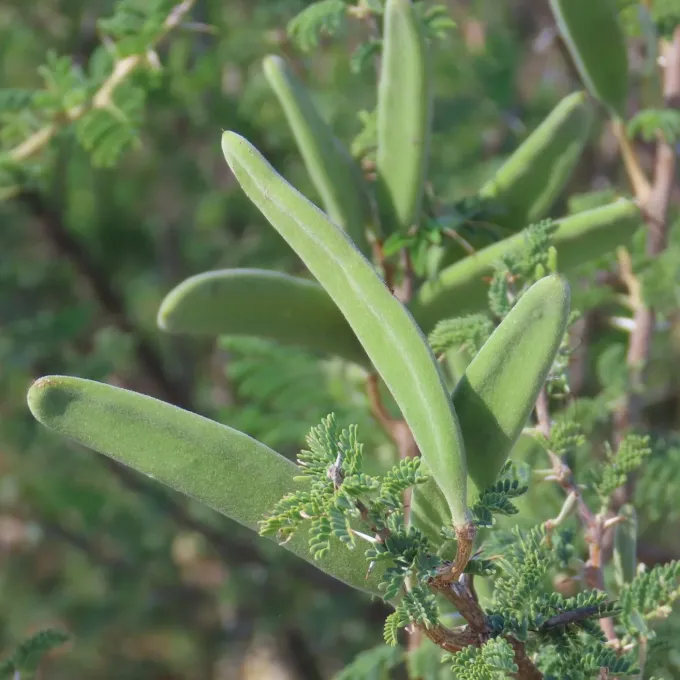
The botanical structure of the plant features a dense, tangled canopy protected by pairs of sharp, recurved thorns. Its pinnate leaves and distinctive yellow-white globular flower heads are characteristic of the Vachellia genus, attracting various pollinators.
This species demands well-drained soil, preferably sandy or stony substrates. It is exceptionally tolerant of nutrient-poor soils and is highly adapted to areas with minimal annual rainfall, making it a staple of semi-arid ecosystems.
In terms of cultivation, Vachellia hebeclada requires full sun exposure and warm temperatures. It is sensitive to waterlogging, so site selection focusing on elevation and soil permeability is essential for successful establishment.
Economically, the plant is primarily utilized for land restoration and erosion control. Its foliage and pods provide critical browse for wildlife and livestock during prolonged droughts, serving as a vital natural food reserve in arid zones.
Main diseases and pests
The primary biological threat to the species comes from seed-feeding insects, specifically bruchid beetles, which often infest the seed pods. This high predation rate can limit the natural regeneration of stands in the wild.
Fungal pathogens associated with high moisture levels are a potential threat to the bark and root systems. However, the plant is remarkably hardy and generally exhibits high resistance to pests when grown in its native ecological range.