
Vachellia haematoxylon
Vachellia haematoxylon
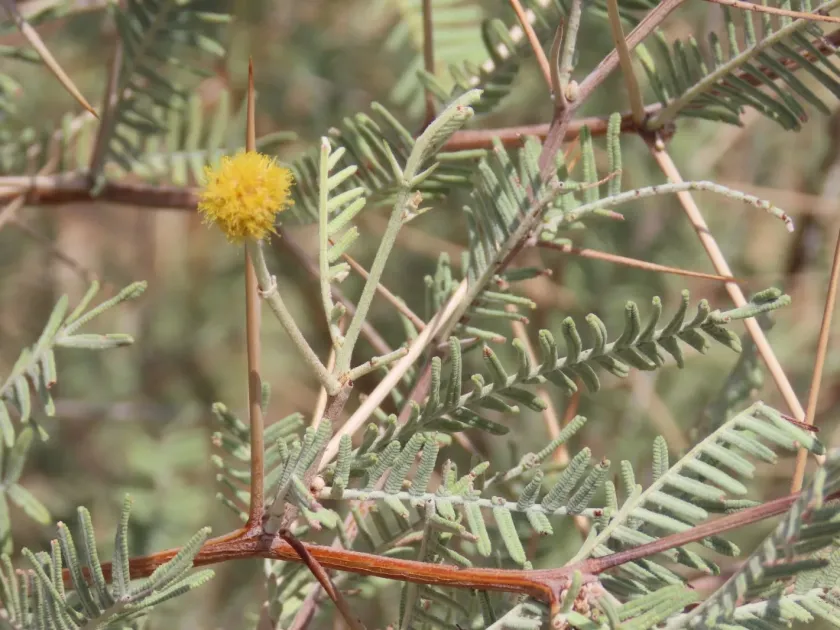
Description
Growing requirements
Vachellia haematoxylon is a resilient tree or shrub belonging to the Fabaceae family, native to the arid savanna and dune landscapes of Southern Africa, most notably the Kalahari Desert.
This species is highly specialized for extreme environments, thriving in deep, loose sandy soils where other vegetation might struggle to establish a root system.
Botanically, the plant is characterized by its fine, feathery foliage and sharp thorns, which act as a defense against browsers in the harsh desert ecosystem.
The tree provides significant economic value as a source of dense, durable wood used for timber and charcoal production, and it plays a vital role in soil conservation.
In its natural habitat, it serves as a critical food source for both wildlife and livestock, as the leaves and seed pods are rich in nutrients during dry periods.
Main diseases and pests
The primary threat to Vachellia haematoxylon populations is overgrazing, which prevents young seedlings from surviving the early stages of their growth cycle.
Insect infestation, particularly by bruchid beetles, poses a significant risk to the reproductive success of the plant by consuming seeds within the pods before they germinate.
Excessive moisture retention in soils can lead to root rot and other fungal diseases, as the species is evolutionary adapted to well-drained, porous ground.
Unregulated harvesting for firewood and traditional building materials continues to deplete mature trees, threatening the long-term sustainability of local groves.
Changing rainfall patterns due to climate instability may reduce the regeneration frequency, making it harder for the species to recover from local environmental pressures.