
Vachellia flava
Vachellia flava
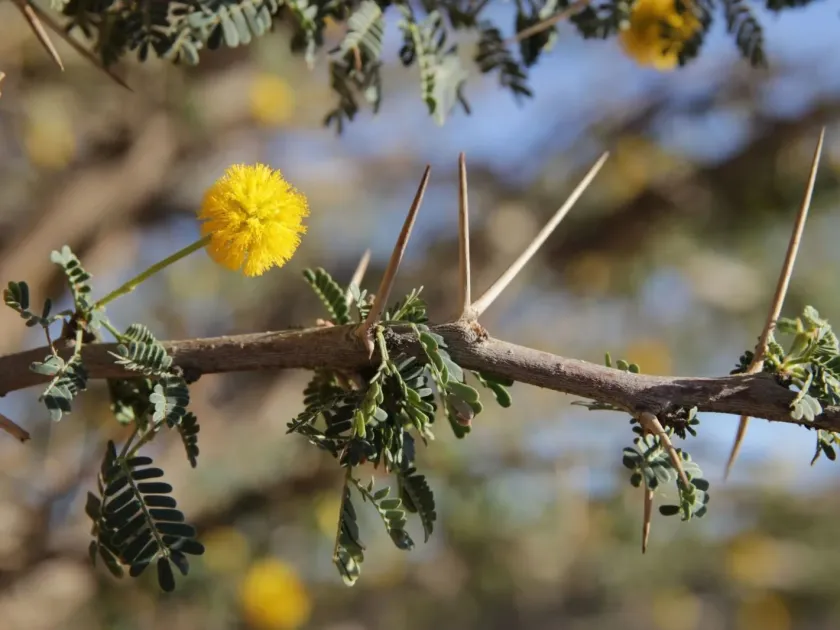
Description
Sowing dates
Vachellia flava is a member of the Fabaceae family, highly adapted to arid and semi-arid environments. The propagation process primarily involves seeding, which requires pre-sowing scarification treatments to break the seed coat and ensure uniform germination rates.
For large-scale afforestation or agroforestry systems, seeds are sown in prepared soil beds during the onset of the rainy season. Using containerized seedling production in nurseries often results in higher field survival rates compared to direct seeding methods.
The optimal sowing depth is approximately 1–2 centimeters, ensuring sufficient soil contact and moisture retention during the critical germination phase. Initial irrigation is essential to support the development of the primary root system in the first few months.
Planting schedules must align with local rainfall patterns to minimize irrigation requirements. The spacing between individuals is dictated by the intended use, whether for timber, shelterbelts, or livestock fodder management.
Advanced agricultural techniques, such as soaking seeds in warm water, significantly reduce dormancy periods, accelerating early plant growth and improving overall establishment success in harsh climates.
Growing requirements
Vachellia flava is an extremely drought-tolerant species, specifically evolved for survival in savanna and desert-edge regions. It thrives in well-drained sandy or loamy soils and exhibits remarkable resilience to poor nutrient conditions.
The species is highly heliophilous, requiring full exposure to sunlight for healthy development; shade significantly hinders its growth and vigor. It is well-adapted to the high temperatures characteristic of tropical and subtropical latitudes.
This tree shows significant tolerance to saline soils, making it a viable candidate for land reclamation and soil restoration projects. Its deep taproot system allows it to access water deep within the soil profile during dry periods.
It can survive in areas with annual rainfall ranging from 300 to 800 mm, enduring extended dry seasons without significant mortality. Its adaptability makes it an essential component of sustainable land management in water-stressed regions.
Vachellia flava possesses strong wind resistance, making it an excellent choice for windbreak plantations that mitigate soil erosion and protect crops from damaging winds in open field environments.
Yield
The productivity of Vachellia flava is assessed based on its multi-purpose yield, including high-quality biomass for fodder and durable timber. In pasture-based systems, its leaves and pods provide a crucial protein source for livestock.
Yield estimation involves measuring the annual accumulation of vegetative biomass per hectare. Strategic pruning of the canopy can enhance lateral growth, thereby increasing the sustainable harvest of leaves for animal consumption.
The timber produced by this species is dense, hard, and naturally resistant to decay, making it valuable for artisanal woodworking, tool handles, and high-quality charcoal production. Harvesting cycles are determined by tree maturity.
The production of pods and seeds also holds minor commercial potential for reproduction or nutritional purposes. The nitrogen-fixing capacity of the tree further benefits the overall productivity of the agroforestry system.
Economic returns are optimized through integrated land use, where the tree contributes to soil fertility improvement while providing renewable raw materials for local farming communities.
Main diseases and pests
Major biological threats include specific insect pests, such as seed beetles (Bruchidae), which damage seeds within pods and negatively impact the natural regeneration cycle. Regular monitoring is essential for seed quality management.
Fungal pathogens can affect the root collar if there is prolonged waterlogging in the soil. Proper site selection and drainage management are critical cultural practices to prevent the development of root rots in nurseries.
Large herbivores and livestock represent a significant threat to juvenile trees, often consuming the bark and tender branches. The use of protective physical barriers is recommended until the plants reach a size that is less vulnerable.
Viral pathogens transmitted by sap-sucking insects can affect overall tree health. Maintaining good field hygiene by removing symptomatic branches helps prevent the spread of infections within the plantation.
Regular maintenance, including the removal of deadwood and monitoring for pest outbreaks, ensures the long-term phytosanitary health of Vachellia flava stands and maximizes their lifespan.