
Sweet Acacia
Vachellia farnesiana
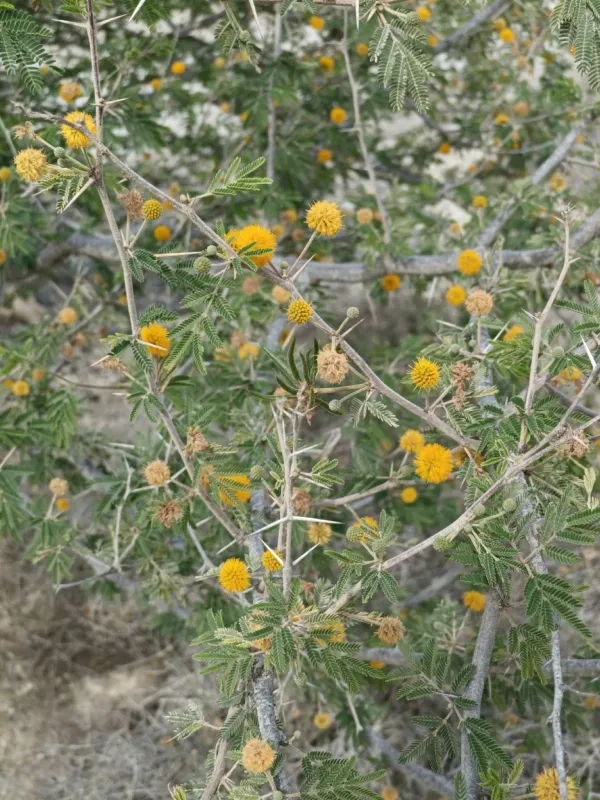
Description
Sowing dates
Sweet Acacia (Vachellia farnesiana), a member of the Fabaceae family, is propagated primarily through seeds. Due to the hard seed coat, scarification or hot water treatment is necessary to ensure successful germination and seedling uniformity.
Seeds are usually sown in nursery trays during the late winter or early spring, maintaining a warm environment with temperatures between 20°C and 25°C. Proper soil moisture is critical, yet excessive watering must be avoided to prevent early-stage damping-off.
Once seedlings reach a height of 20–30 cm, they are transplanted into their permanent outdoor locations. The root system is robust, allowing the plant to adapt to various soil profiles, provided the site is well-drained.
In commercial settings, spacing is determined by the intended method of harvest, with enough room left between rows to facilitate manual picking and field management. Clear site preparation is essential for long-term health.
Regular maintenance during the establishment phase, including weed control and light structural pruning, helps young trees develop a strong, productive framework for future flowering cycles.
Growing requirements
Sweet Acacia is a sun-loving and heat-tolerant species. It thrives in open, high-light environments and is sensitive to frost, requiring protection if temperatures drop below freezing for extended periods.
Regarding soil preferences, the plant is adaptable but performs best in well-drained, sandy-loam soils. It tolerates slightly alkaline to neutral pH levels but will suffer in heavy or waterlogged ground.
The species demonstrates excellent drought tolerance once established, thanks to its deep taproot. However, for maximum flower yield, providing irrigation during dry spells is recommended to support consistent blooming.
Climate suitability is broad, ranging from arid to tropical regions. It is important to ensure the tree has good airflow, which reduces humidity around the foliage and minimizes the risk of opportunistic fungal infections.
Soil nutrient management should focus on balanced NPK applications, particularly during the pre-blooming phase, to enhance the production of secondary metabolites and essential oils within the flower buds.
Main diseases and pests
Common pests include aphids, spider mites, and scale insects, which can cause significant stress to the tree. If left untreated, these pests can reduce the quantity and quality of the flowers produced.
Fungal issues, such as root rot or leaf spots, are typically associated with poor drainage or excessive atmospheric moisture. Maintaining proper plant health through sanitation is the best defense.
Integrated Pest Management (IPM) strategies, including the use of neem oil or targeted biological controls, are highly effective in preserving the plant's health without compromising the chemical profile of its blossoms.
Periodic inspection of the canopy and trunk is advised to detect early infestations or structural weaknesses. Swift intervention with pruning or light chemical applications can prevent widespread damage.
- Consistent field scouting for pest activity.
- Application of environmentally friendly systemic insecticides when necessary.
- Proper pruning techniques to ensure maximum light penetration and airflow.
Harvesting
The harvest is a labor-intensive manual process. Flowers are collected at dawn when the concentration of essential oils is at its peak; as temperatures rise, these aromatic compounds evaporate rapidly.
Post-harvest logistics are crucial; the delicate flowers must be transported to a facility for extraction immediately to maintain the integrity of their sweet, violet-like scent which is highly sought after by perfumers.
Beyond the fragrance industry, various parts of the Sweet Acacia are utilized for their tannin content, particularly the bark and pods, which have traditional applications in leather tanning and natural dyeing.
The wood is known for its durability and aesthetic appeal, making it a valuable byproduct for small-scale carpentry and craft works after the tree has completed its productive lifecycle.
This multipurpose nature makes Sweet Acacia a highly viable crop for sustainable farming systems in warm climates where diverse income streams are prioritized.