
Vachellia erioloba
Vachellia erioloba
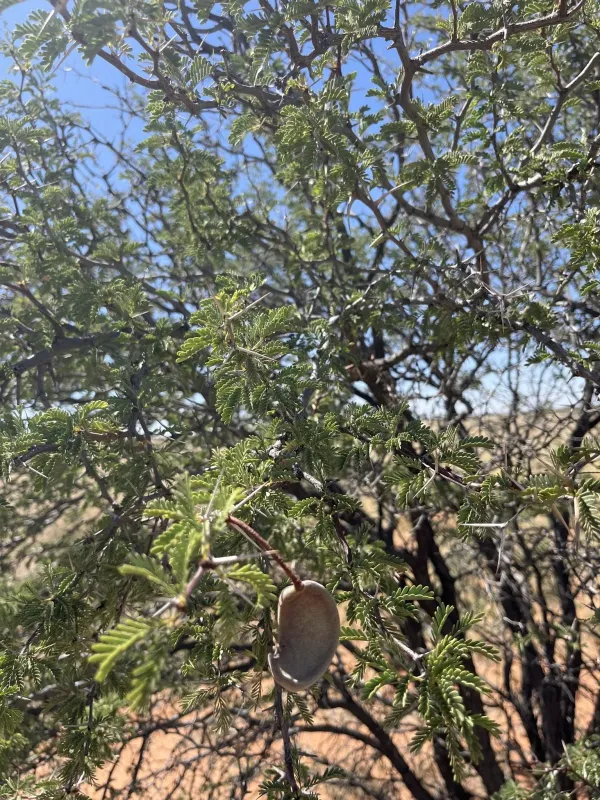
Description
Sowing dates
Vachellia erioloba, commonly known as the camel thorn, relies on a seed-based propagation method. The seeds are characterized by a very hard coat, which acts as a dormancy mechanism. Effective germination in cultivation requires scarification or hot water treatment to breach this barrier.
The optimal sowing time is at the onset of the rainy season. Warm soil temperatures combined with moisture are necessary to trigger the germination process, allowing the seedling to establish its critical deep taproot before the dry period begins.
In nursery settings, seeds should be sown in deep tubes or containers. Because this species focuses its initial energy on root development rather than canopy growth, providing adequate depth is essential to avoid root curling, which can compromise the tree's future stability.
Site selection is paramount; this tree requires full sun exposure. Even partial shade during the seedling stage can lead to stunted growth and weak stem development, making it unsuitable for intercropping with tall, dense crops.
Spacing should be generous to accommodate both the wide, spreading canopy and the extensive root system. In large-scale agroforestry projects, planting in rows with wide gaps allows for optimal nutrient and water absorption without competition.
Growing requirements
This species is highly adapted to arid and semi-arid environments. It can survive in regions with very low annual rainfall, utilizing a deep taproot system that can reach groundwater reserves located dozens of meters below the surface.
Vachellia erioloba thrives in a variety of soil types, including sandy, gravelly, and alkaline soils. It is particularly effective at colonizing degraded land where other vegetation struggles, thanks to its ability to fix atmospheric nitrogen via symbiotic bacteria.
It prefers high temperatures and is well-suited for hot climates. While mature specimens demonstrate good frost tolerance, young trees are susceptible to cold damage and may require protection in areas prone to seasonal freezing temperatures.
Management practices for this culture are generally low-intensity. Once established, the tree is highly resilient and requires little to no irrigation or chemical fertilization, making it a sustainable choice for resource-scarce farming regions.
Preventing soil erosion is a key benefit of this culture. By maintaining a healthy population of Vachellia, farmers can stabilize topsoil, improve soil structure, and increase the water-holding capacity of the surrounding environment.
Yield
The yield of Vachellia erioloba is measured by its utility as a multi-purpose fodder and resource tree. Its pods, which ripen during the dry season, are a vital source of protein and carbohydrates for livestock, maintaining herd health when other grazing is depleted.
The wood is highly valued for its extreme density and durability. It provides an excellent fuel source that burns slowly and generates significant heat, though sustainable harvesting methods must be employed to prevent local resource depletion.
Beekeeping is a common secondary industry associated with this species. The flowers provide a reliable nectar source, and the honey produced is often characterized by a unique, pleasant flavor, adding economic value to the farmstead.
As a nitrogen-fixing legume, the tree contributes to the overall fertility of the soil. Its leaf litter decomposes to provide essential organic matter, which enhances the productivity of grasses and shrubs growing beneath its canopy.
Overall economic yield is long-term. While it grows slowly, the steady availability of fodder and the improvement of soil health provide a cumulative return that supports the longevity of agricultural operations in difficult climates.
Main diseases and pests
The most significant biological threat is the Bruchidae beetle family, which infests the seed pods. These pests can destroy a large percentage of the potential seed bank, severely limiting the tree's ability to regenerate naturally in the wild or in nurseries.
Fungal pathogens can affect seedlings, particularly in poorly ventilated nursery conditions with excessive humidity. Maintaining well-draining soil and preventing waterlogging are the primary defense strategies against these soil-borne diseases.
Parasitic plants, such as mistletoe, frequently colonize mature trees. While the tree can withstand minor infestations, heavy colonization can drain its resources, lead to branch dieback, and eventually weaken the overall health of the specimen.
Human activities represent a major threat. Unregulated charcoal production and overgrazing by goats—which target young saplings—are primary causes for the decline of Vachellia populations in various parts of its historical range.
Regular monitoring for pests and damage is recommended. Proactive management, such as the selective pruning of infested branches and the protection of younger trees until they are large enough to withstand browsing, is essential for healthy cultivation.