
Vachellia drepanolobium
Vachellia drepanolobium
Description
Sowing dates
Vachellia drepanolobium, commonly known as the whistling thorn, naturally propagates through seed dispersal after the pods mature and split.
When cultivating this species, seeds must undergo scarification to break the physical dormancy of their hard outer coat before planting.
The optimal time for sowing is at the beginning of the rainy season to ensure adequate soil moisture for initial seedling development.
Direct seeding in well-prepared, loose soil allows for strong root establishment, which is vital for surviving the subsequent dry months.
Nursery-grown saplings are often preferred for larger reforestation projects to improve the survival rate against environmental stressors.
Growing requirements
This species belongs to the Fabaceae family and is a characteristic shrub or small tree of the East African savanna ecosystems.
It thrives in black cotton soils, which are heavy clays that exhibit seasonal waterlogging—a condition most trees cannot endure.
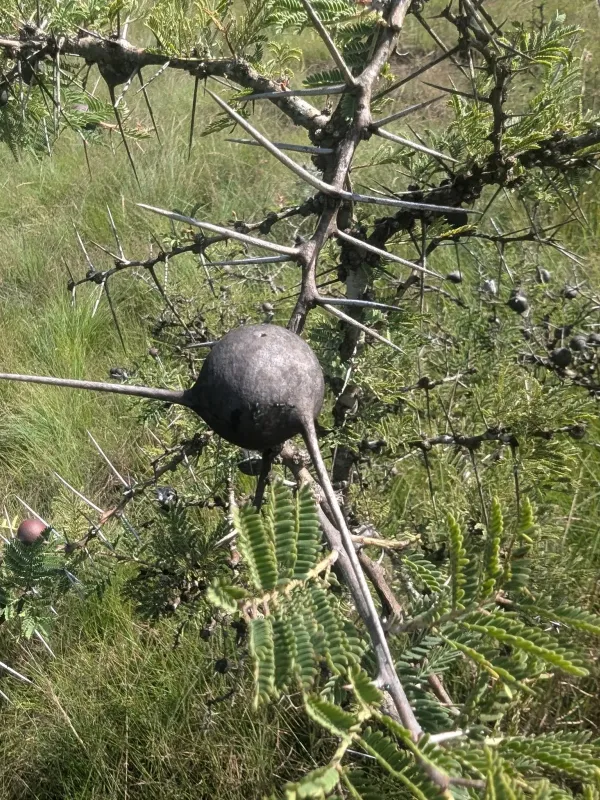
The tree exhibits a remarkable biological adaptation by forming hollow structures called galls, which host colonies of symbiotic ants.
These ants protect the tree from herbivores by attacking any animal that attempts to consume the leaves, creating a unique defensive loop.
The plant requires high solar radiation and is highly adapted to the tropical savanna climate with distinct wet and dry seasons.
Yield
The economic utility of the tree is primarily centered on sustainable fuelwood production and the generation of quality charcoal.
In silvopastoral systems, it serves as a source of browse for camels and goats, which are the main livestock able to navigate its thorns.
The tree also plays a crucial role in soil enrichment through nitrogen fixation, benefiting the overall productivity of the savanna landscape.
While not a high-output timber crop, its biomass is essential for maintaining the ecological balance of arid and semi-arid grazing lands.
Long-term yield is dependent on maintaining the health of the ant-tree symbiosis, which acts as a biological shield for the plant.
Main diseases and pests
The primary threats include intense grazing pressure, particularly from livestock that can bypass the tree's natural defense mechanisms.
Pathogenic fungi can infect the tree if the bark is repeatedly damaged or if the symbiotic ant colonies are disrupted or lost.
Savanna fires pose a significant risk to younger individuals that have not yet developed the fire-resistant properties of mature bark.
Environmental degradation and desertification lead to the loss of suitable habitats, reducing the density of whistling thorn populations.
Competing invasive plant species may outcompete Vachellia in disturbed areas, leading to a decline in natural regeneration rates.