
Whitethorn acacia
Vachellia constricta
Description
Growing requirements
Vachellia constricta, commonly known as Whitethorn acacia, is a perennial shrub belonging to the Fabaceae family. Native to the arid southwestern United States and northern Mexico, it is a hallmark species of desert and semi-desert landscapes.
The plant thrives in well-drained, gravelly, or rocky soils, showcasing remarkable tolerance for low-nutrient environments. It requires full solar exposure to maintain its compact growth form and to stimulate the production of its signature yellow, fragrant flowers.
Climatic requirements are centered around heat tolerance and adaptation to extreme drought conditions. Its root system is capable of exploring deep soil layers, making it an excellent candidate for erosion control in degraded, arid terrains.
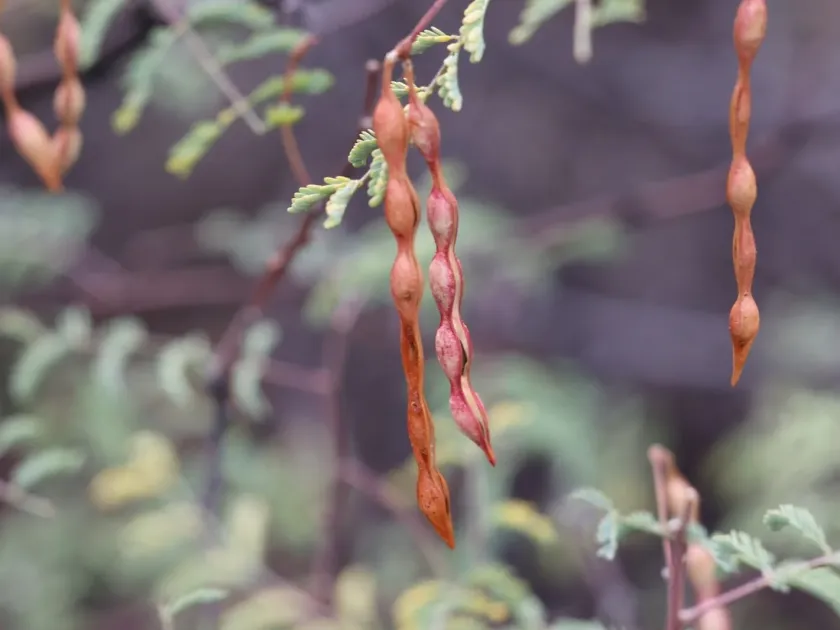
Botanically, it is identified by its long, white, straight spines that provide protection against herbivores. The foliage consists of bipinnate leaves that are shed during periods of intense moisture stress, allowing the plant to conserve vital energy.
In terms of agricultural utility, Vachellia constricta serves as a significant nectar source for pollinators and contributes to nitrogen fixation in the soil. It is often used in restoration ecology projects to stabilize soil and enhance biodiversity in dry regions.
Main diseases and pests
Whitethorn acacia is naturally robust, but it can be susceptible to soil-borne pathogens if drainage is inadequate. Waterlogging is the most significant threat to its health, often leading to crown and root rot that can be fatal to mature plants.
Seed-feeding beetles represent the primary pest challenge, specifically targeting the seed pods. While this rarely kills the plant, it can significantly reduce the success rate of natural propagation or artificial seeding efforts.
Fungal issues, such as leaf spot, may occur if humidity levels remain consistently high for extended periods, especially in poorly ventilated environments. Maintaining proper plant spacing is the most effective cultural practice to mitigate this risk.
Insect herbivory is generally minor, as the plant's structural and chemical defenses effectively deter most generalist feeders. Regular monitoring of leaf integrity during the spring growth flush is sufficient for maintaining plant vigor.
Management strategies should focus on preventative measures rather than curative treatments. Ensuring the site is well-drained and limiting irrigation to minimal, infrequent intervals mimics the plant's natural environment and promotes longevity.