
Vachellia collinsii
Vachellia collinsii
Description
Growing requirements
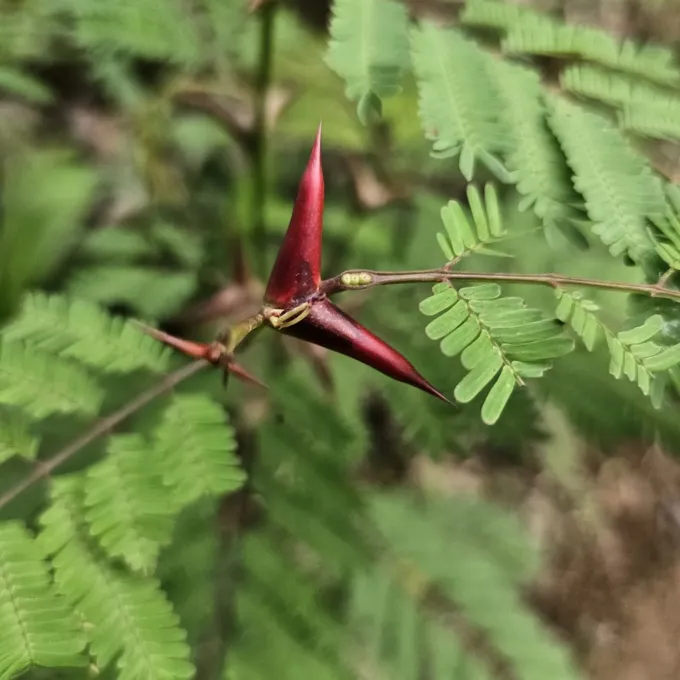
Vachellia collinsii is a woody perennial species belonging to the Fabaceae family, native to the tropical regions of Central America. This tree is scientifically notable for its obligate mutualism with Pseudomyrmex ants, which reside within the plant's distinctive hollow, swollen stipular thorns.
From a botanical standpoint, the plant is well-adapted to tropical conditions. It utilizes specialized structures, such as Beltian bodies on its leaflets, to provide a nutrient-rich food source for its ant defenders, ensuring protection from herbivores and surrounding vegetation that might otherwise compete for sunlight.
In terms of environmental requirements, Vachellia collinsii demands high, consistent temperatures and is strictly intolerant of frost. It thrives in regions with tropical rainfall patterns, though it possesses physiological mechanisms to tolerate moderate dry seasons typical of its native environment.
The ideal soil profile for this species includes well-drained, porous soils that prevent root saturation. While it can establish itself on marginal lands, its growth rate and biomass production are significantly enhanced in nutrient-moderate soils with good aeration.
Agriculturally, this species is utilized in agroforestry and reforestation projects as a soil-stabilizing agent. Its ability to thrive in degraded soils, combined with its symbiotic protective mechanism, makes it a candidate for sustainable land management practices aimed at restoring biodiversity in tropical ecosystems.