
Vachellia campeachiana
Vachellia campeachiana
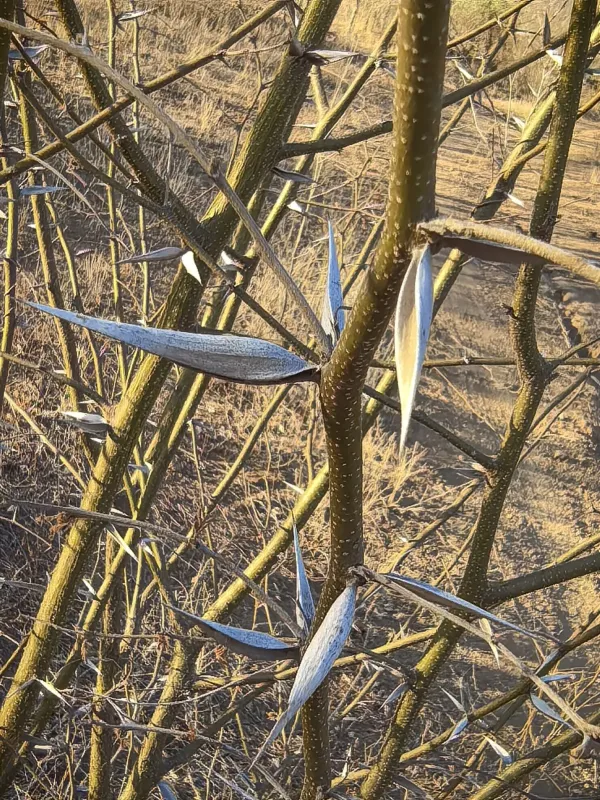
Description
Growing requirements
Vachellia campeachiana, formerly classified within the genus Haematoxylum, belongs to the Fabaceae family. It is a thorny, evergreen shrub or small tree native to the tropical regions of the Americas, specifically Central America and northern South America.
This species thrives in tropical environments characterized by distinct dry and wet seasons. It requires high light intensity and performs best in well-drained, lime-rich, or stony soils where it can establish a deep root system.
The plant demonstrates high adaptability to adverse conditions, including poor nutrient availability and saline soils. It is sensitive to frost, which limits its commercial cultivation to frost-free tropical and subtropical zones.
Agricultural management involves ensuring sufficient space between individual trees to promote air circulation and reduce pest pressure. While the plant is drought-tolerant, supplemental irrigation during the seedling stage significantly enhances early growth rates.
Propagation is typically achieved through seeds, which require scarification to improve germination rates. Due to its thorny nature, careful pruning is necessary in managed groves to maintain accessibility for agricultural maintenance.
Harvesting
The primary historical and economic value of Vachellia campeachiana lies in its heartwood, which contains the pigment hematoxylin. This substance has been widely used as a natural dye for textiles and as a staining agent in biological microscopy.
Harvesting involves the extraction of the heartwood from mature trees, typically after 10 to 15 years of growth. The wood is processed into chips or logs, which are then used in industrial extraction processes to produce the concentrated pigment.
Beyond the pigment industry, the tree serves as a valuable honey plant. Its nectar-rich flowers support apiculture, making it a functional component of agroforestry systems in its native range.
The wood itself is exceptionally dense and durable, making it suitable for high-quality carpentry, small turning projects, and tool handles. This dual-purpose utility maximizes the economic output per hectare.
Harvesting strategies prioritize the selection of older, heartwood-dense trees while ensuring sustainable regrowth. Due to the presence of sharp spines, manual harvesting requires robust protective equipment to ensure worker safety.