
Vachellia bussei
Vachellia bussei
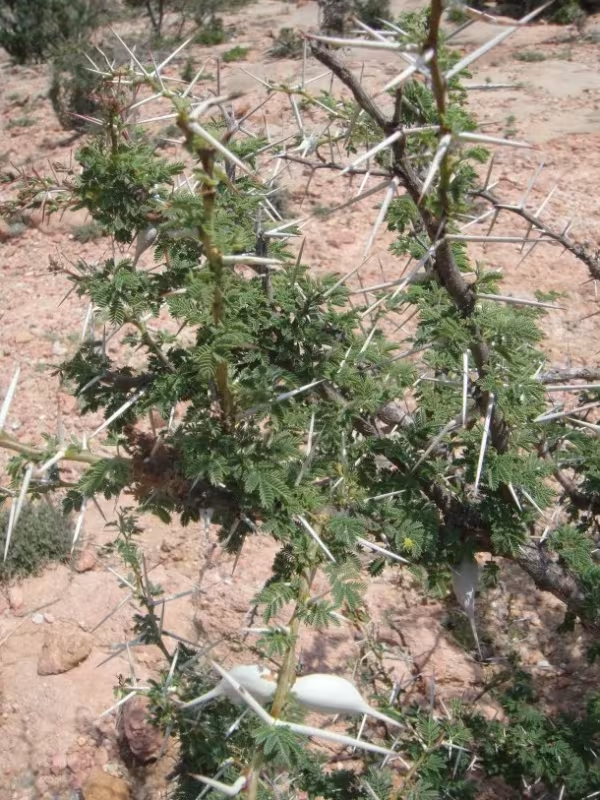
Description
Growing requirements
Vachellia bussei is a woody perennial belonging to the Fabaceae family. Native to East Africa, specifically regions like Ethiopia, Somalia, and Kenya, it is a key species in dryland ecosystems, providing both ecological stability and forage potential.
The species is characterized by its umbrella-shaped canopy and thorny branches, which are physiological adaptations to minimize moisture loss and protect the plant from browsers. It typically grows as a shrub or small tree up to 6 meters tall.
Climatically, this culture requires a hot and arid environment with clear seasonal rainfall patterns. It thrives in well-drained soils, including sandy loams and rocky substrates, where it can utilize its deep taproot to reach water reserves during drought periods.
Cultivation success relies on providing full sun exposure and preventing soil compaction. It is not suitable for waterlogged or poorly drained conditions, which can lead to rapid onset of root-related pathologies.
Economically, Vachellia bussei is valued for its bark, which serves as a source of tannins, and its high-protein leaves, which are browsed by camels and goats. It plays a significant role in sustainable agroforestry systems in semi-arid zones.
Main diseases and pests
The primary threats to Vachellia bussei include bruchid beetles, which infest and destroy seeds, limiting natural regeneration and posing a major challenge for nursery production and large-scale planting efforts.
Fungal pathogens causing root rot are a significant concern when soil drainage is compromised. These infections are often difficult to treat, making prevention through site selection the most effective management strategy.
Termites are a major pest for young saplings, often stripping the bark or damaging the vascular tissue at the base of the stem. This damage can lead to structural instability or death if not monitored effectively in the early years of development.
Parasitic plants such as mistletoe often colonize the canopy, drawing essential nutrients and water from the host. Periodic pruning is recommended to reduce the burden of these parasites and improve the overall health of the tree.
Overgrazing by livestock, despite the plant's natural defenses, can suppress growth and prevent recruitment of new individuals. Proper grazing management, including the use of seasonal exclosures, is crucial for preserving stand health.