
Vachellia bucheri
Vachellia bucheri
Description
Growing requirements
Vachellia bucheri is a distinct tree species belonging to the legume family (Fabaceae), endemic to the island of Cuba. This plant is well-adapted to specific ecological niches, primarily thriving in dry forest environments and rocky terrains where other vegetation may struggle to persist.
The climate requirements for this species are centered on tropical conditions with distinct seasonal rainfall patterns. Vachellia bucheri is highly resilient to prolonged droughts, maintaining physiological integrity through heat-stressed periods by optimizing water uptake and metabolic processes.
Soil preferences involve well-drained substrate, with a marked tendency for limestone-derived soils. The plant’s roots are deeply branched, allowing it to tap into subterranean water sources and stabilize itself in thin, rocky soils characteristic of its natural Cuban habitat.
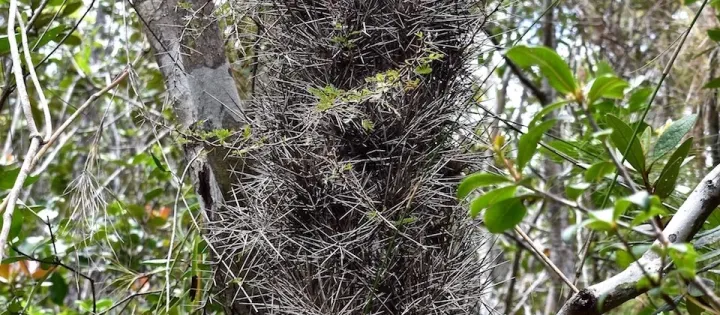
Botanically, the species exhibits typical Vachellia features, including feathery compound leaves and protective thorns that reduce transpiration and deter herbivores. The reproductive stage involves the production of small, globular flowers, which contribute to the ecological cycle within its endemic territory.
In terms of practical usage, Vachellia bucheri is valued for its dense and durable timber, often used in small-scale local carpentry and traditional craftsmanship. Beyond its material value, the species plays a crucial role in soil enrichment through nitrogen fixation, typical of the Fabaceae family.