
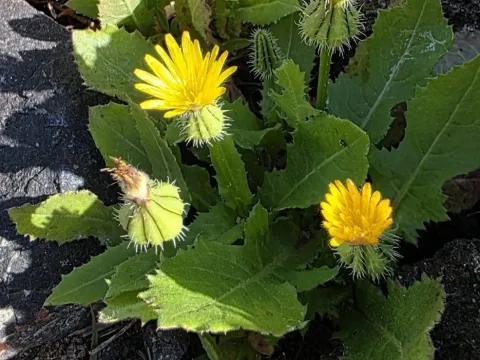
Urospermum
Urospermum
Sowing of Urospermum, a member of the Asteraceae family, is typically performed in early spring once soil temperatures reach 10–12°C. The seeds exhibit high germination rates, and they should be sown at a shallow depth of 1–2 cm.
What the section contains


Urospermum
In Mediterranean-type climates, winter sowing in late October is feasible, allowing the plants to utilize winter moisture for an early growth start. This early development helps the crop establish a robust rosette of leaves before the onset of summer heat.
Standard row cultivation with spacing between 30 and 45 cm is recommended. This setup provides sufficient room for growth and simplifies maintenance operations like weeding during the early stages.
Precision seeding is essential to avoid over-density, which can lead to light competition and reduced leaf quality. The target seeding rate is generally between 3 and 5 kilograms of seeds per hectare.
Post-sowing, it is advisable to roll the soil surface to ensure good seed-to-soil contact, which is critical for successful emergence, especially when soil moisture is limited in the spring.
Urospermum is a hardy crop that thrives in various soil types, including loamy and stony soils. It performs best in light, well-draining soils with a neutral or slightly alkaline pH balance.
The plant is highly drought-tolerant, making it a viable candidate for cultivation in arid regions. It effectively withstands intense, direct solar radiation throughout its entire life cycle without scorching.
There are no specific high-input fertilizer requirements, although moderate nitrogen application during the vegetative phase enhances leaf biomass production. Excess moisture must be avoided, as it can predispose the plants to root rot.
The crop features a short vegetative period, allowing it to function well as a main crop or a catch crop within various rotation schemes. It is capable of flourishing even in relatively nutrient-poor soils.
Sufficient light exposure is vital for the success of Urospermum. Plants grown in shaded areas tend to exhibit poor vigor and reduced palatability, which decreases the overall value of the produce.
The primary economic value of Urospermum lies in its edible leaves, which are appreciated for their mild, nutty flavor. Harvesting is best conducted before the flowering stalks emerge, while the leaves are at their most succulent stage.
Under intensive cultivation conditions with proper irrigation, yields can reach 15–20 tons of fresh biomass per hectare. Multiple harvests can often be obtained by carefully cutting the leafy rosettes.
Urospermum also displays high seed yield potential. The plants produce numerous seeds equipped with pappi, which facilitate dispersal by wind, making timely harvest essential to prevent premature seed loss in the field.
Used as forage for small ruminants, the plant yields approximately 10–12 tons of quality biomass. Livestock find the greens highly palatable, which makes it an excellent supplement for grazing pastures.
The overall profitability depends on local market demand for gourmet greens. For small and medium-sized farms, Urospermum represents an interesting niche product with growing potential.
Common issues include fungal diseases like powdery mildew, which often develop in environments with high humidity. Proper crop management, including adequate spacing and ventilation, helps minimize these risks.
Pests that typically affect Asteraceae plants can also impact Urospermum. Aphids are the most common issue, feeding on the tender foliage, alongside certain larvae that consume leaves and buds.
Root rot represents the most serious threat, particularly in poorly drained or heavy clay soils. Ensuring proper drainage and avoiding stagnant water are the most important preventative measures for root health.
Weeds can pose a challenge during early growth stages, making mechanical cultivation between rows a necessary task. Caution should be exercised when applying chemical herbicides due to plant sensitivity.
Slugs and snails may damage young leaves during wet spring weather. In organic or small-scale systems, manual traps or physical barriers provide effective protection without chemical residues.
Harvesting of Urospermum begins when the leaf rosettes reach market size. Depending on the scale, leaves are either hand-harvested or collected using specialized mowers designed for leafy green vegetables.
To ensure peak freshness, harvest should take place in the early morning when the plants contain maximum water content. Post-harvest, the product should be cooled promptly to maintain its turgor and shelf life.
When grown for seed, harvest occurs at the wax-ripe stage, once the flower heads show signs of drying and the seeds reach full maturity. Monitoring is key to avoid significant losses from natural seed shedding.
For leafy produce, selective harvesting is possible by cutting leaves above the growth point, which encourages regrowth for subsequent cuttings, extending the harvest window throughout the season.
Post-harvest handling involves cleaning and cooling. Keeping the produce at a consistent temperature between +2°C and +5°C ensures high quality and crispness for several days during storage and transport.