
Urospermum dalechampii
Urospermum dalechampii
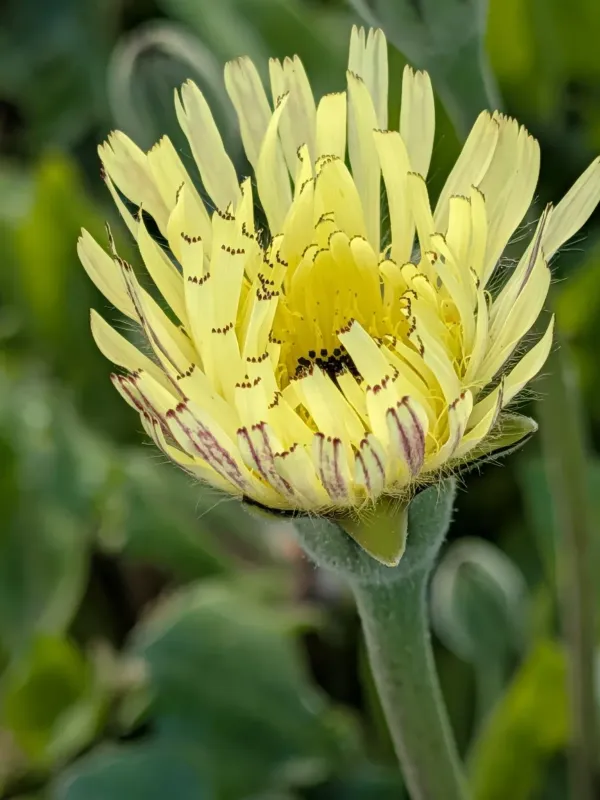
Description
Sowing dates
Urospermum dalechampii is a perennial herbaceous plant from the Asteraceae family. Sowing is typically carried out in the spring, once soil temperatures consistently reach 10-12 degrees Celsius.
The seeds require light for optimal germination, so they should be surface-sown or covered with a very thin layer of substrate, no more than 1 centimeter deep.
For large-scale cultivation, seeds are sown in rows spaced approximately 35-40 centimeters apart, ensuring enough space for efficient weed management.
Consistent moisture is essential during the first three weeks post-sowing, as the seeds are sensitive to desiccation before they establish a robust root system.
Stratification of seeds prior to planting can significantly improve germination rates, especially if the seeds have been stored for long periods.
Growing requirements
This species thrives in Mediterranean climates and demands full sun exposure to produce high-quality leaves and avoid etiolation.
The plant is highly adaptable to various soil types but prefers well-drained, calcareous soils that do not retain excess water, which could lead to root rot.
Urospermum dalechampii is notably drought-tolerant, capable of surviving through hot, dry summers due to its deep taproot system.
The ideal temperature range for vegetative growth is between 18 and 25 degrees Celsius, though it exhibits good tolerance to cooler winter conditions.
Excessive humidity must be avoided, particularly during the flowering stage, to prevent fungal diseases that often affect the Asteraceae family.
Yield
The primary yield consists of fresh rosettes of leaves, which are prized for their mild, pleasant flavor in culinary applications.
Farmers can expect a yield of approximately 1.5 kilograms of leaf mass per square meter, provided the plants are irrigated properly and harvested regularly.
Staggered harvesting helps maintain the plant in a juvenile vegetative state for a longer period, thus increasing the total seasonal productivity.
Flower buds are also considered a delicacy; however, allowing plants to bolt for buds or seeds will drastically decrease the yield of leaf harvest.
Productivity remains stable over several years if the plant is treated as a perennial and provided with minimal nutrients during the autumn dormant phase.
Main diseases and pests
Aphids are the most common pest, typically attacking the underside of the leaves and the tender parts of the flower stalks during warm weather.
Powdery mildew can become a significant threat if planting density is too high, leading to poor air circulation and increased humidity levels.
Root pathogens, particularly Phytophthora species, may occur if the soil structure does not allow for efficient water drainage after heavy rains.
Slugs and snails often feed on young, succulent seedlings, necessitating the use of perimeter barriers or organic deterrents in the field.
Effective pest management relies on balanced nitrogen levels, as excessive fertilizer can make the leaves more susceptible to herbivorous insects.
Harvesting
Harvesting is best conducted during the early morning hours, as the leaf tissues remain turgid and contain the highest concentration of minerals.
Using a clean, sharp knife to cut the outer leaves allows the plant to continue producing new growth from the central rosette point throughout the season.
The harvested greens should be placed in cool, shaded areas immediately after cutting to preserve freshness and minimize respiration losses.
If seeds are the target, flower heads should be harvested when they turn brown but before they release their wind-dispersed pappus seeds.
For storage, the leaves can be kept in a cold, humid environment at roughly 2 degrees Celsius, which extends shelf life for up to one week.