
Uncarina decaryi
Uncarina decaryi
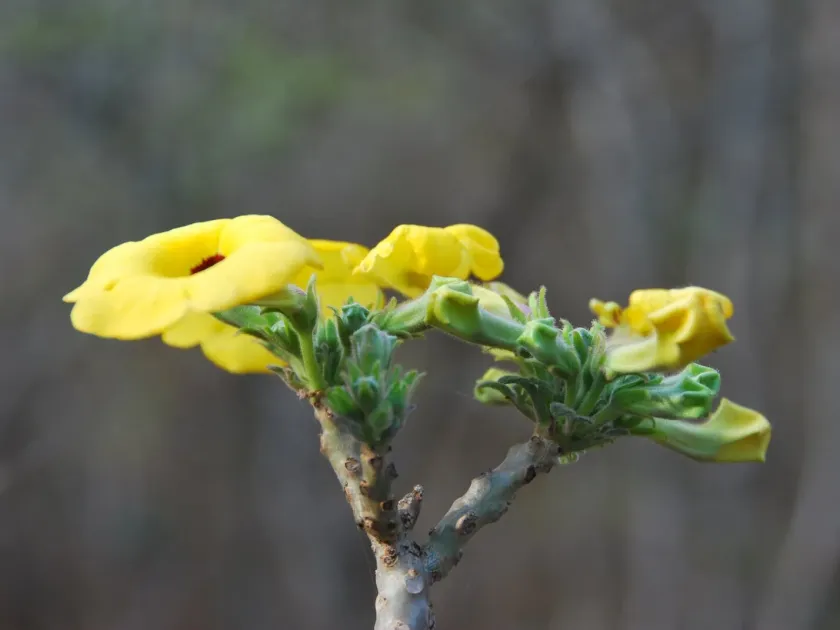
Description
Growing requirements
Uncarina decaryi is an exotic succulent shrub belonging to the Pedaliaceae family. Native to Madagascar, this plant has adapted to harsh tropical conditions, growing primarily in dry forests and rocky slopes where water availability is seasonal.
The plant is characterized by a prominent caudex, a swollen stem base that acts as a water storage organ. Its leaves are large, covered with fine, sticky hairs, which help the plant retain moisture and discourage herbivores from consuming its foliage.
In terms of climate, Uncarina decaryi demands high light intensity to maintain its compact form and vibrant growth. Temperatures should be kept between 20°C and 30°C, and the plant must be protected from frost at all times during the year.
The soil must be well-draining, mimicking the rocky, loose soils of its natural habitat. A mixture of pumice, perlite, and high-quality potting compost provides the necessary structure to prevent the roots from remaining in standing water.
Proper irrigation management is essential for this culture. During the active growing season, water deeply but allow the soil to dry out completely before the next watering session to prevent the onset of root decay.
Main diseases and pests
The most significant threat to Uncarina decaryi is the risk of stem and root rot caused by stagnant moisture. This is especially prevalent during the dormant winter period if the temperature remains too low while the soil is damp.
Pests such as spider mites and mealybugs can pose a serious threat to the foliage. They thrive in low-humidity environments and can quickly debilitate the plant if not addressed with prompt chemical or biological control.
Fungal pathogens often appear when there is insufficient airflow around the plant. Ensuring proper spacing and ventilation in the greenhouse or growing area is a key strategy for disease prevention.
Scale insects can also infest the stems, particularly under the cover of the dense, hairy leaves. Regular monitoring and physical inspection of the plant are highly recommended to catch infestations in their early stages.
Always sterilize tools when pruning or handling the plant to avoid spreading infections. Maintaining a clean growing environment is vital for the long-term health and development of this unique caudiciform species.