
Tuberous begonia
Begonia x tuberhybrida Voss
Description
Sowing dates
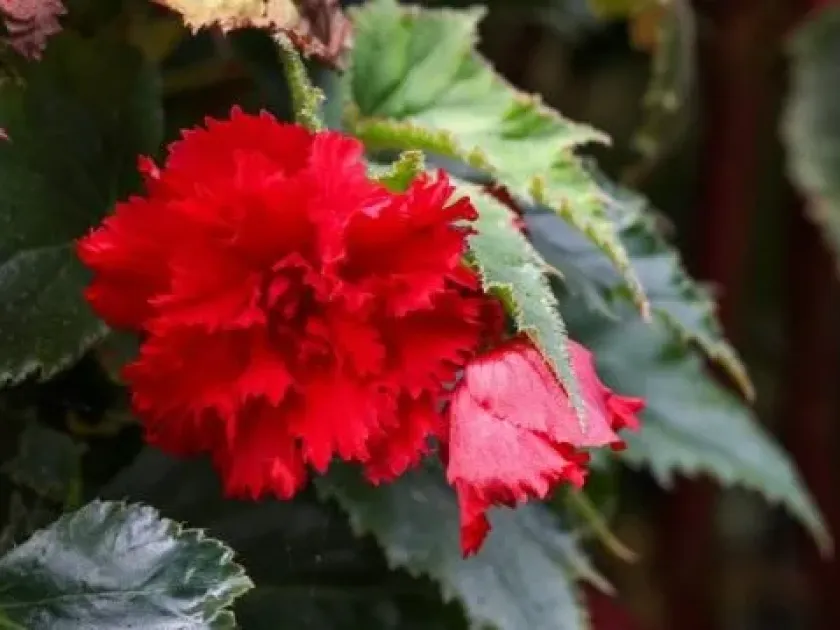
Tuberous begonia, known scientifically as Begonia x tuberhybrida, is a hybrid perennial species of the Begoniaceae family popular for its diverse flower forms and vibrant colors.
Propagation is primarily achieved via seeds or tuber division. When starting from seeds, use a fine-textured, sterile medium, sowing in mid-winter to ensure maturity by the following season.
For tuber propagation, healthy, mature tubers are placed in shallow trays with a moist growing medium during early spring. The concave side must face upwards to facilitate shoot emergence.
Proper depth is critical; tubers should be barely covered with soil to prevent rot while ensuring sufficient moisture for sprouting buds.
Once shoots reach several centimeters in height, the plants are ready for transplanting into individual containers or garden beds, provided the danger of frost has passed.
Growing requirements
Tuberous begonias thrive in temperate climates, requiring consistent warmth without extreme heat or frost. They originate from high-altitude tropical environments, necessitating good air circulation.
The soil must be well-draining, slightly acidic, and rich in organic matter. Heavy clay soils are unsuitable and often lead to poor root health and tuber rot.
Light requirements are strict: they prefer bright, dappled sunlight. Direct, harsh midday sun causes leaf scorching and floral damage, while extreme shade leads to spindly growth.
Maintaining adequate humidity is essential. Water the base of the plant to prevent foliage moisture, as excessive water on leaves is a primary catalyst for fungal infections.
Regular fertilization with a balanced, water-soluble fertilizer is required during the growing season to support the high metabolic demand of large flower production.
Main diseases and pests
Powdery mildew is the most common fungal issue for tuberous begonias, often appearing when humidity is high and airflow is stagnant in greenhouse environments.
Botrytis blight (grey mold) frequently attacks flowers and stems, particularly in damp and cool conditions, causing dark, mushy spots that spread quickly.
Common pests include greenhouse whiteflies and two-spotted spider mites. These pests thrive in dry conditions and can cause significant foliage stunting if left untreated.
Root rot, caused by pathogens like Pythium, can devastate a collection, often starting from overwatering or poorly sterilized potting materials.
- Application of specialized fungicides.
- Effective spacing between plants for airflow.
- Regular monitoring for early signs of infestations.
Harvesting
Harvesting tubers begins in autumn after the foliage begins to yellow and die back. This signals that the plant is transitioning into its dormant period.
Tubers are carefully lifted from the soil, the stems are trimmed close to the bulb, and they are left in a dry, ventilated area to cure for several weeks.
After curing, the tubers should be stored in dry peat moss or sawdust at temperatures between 5 and 10 degrees Celsius to prevent dehydration and fungal growth during winter.