
Angel Wing Begonia
Begonia coccinea Hook.
Description
Growing requirements
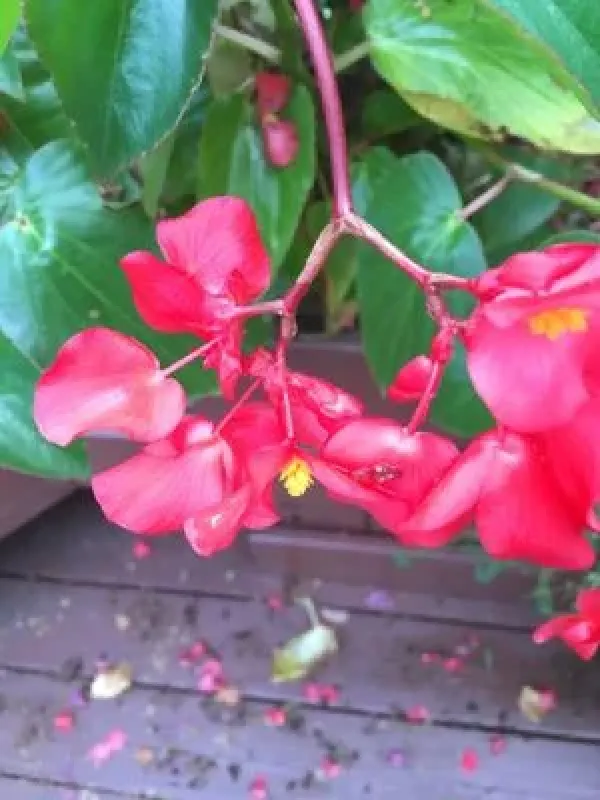
The Angel Wing Begonia (Begonia coccinea) is a member of the Begoniaceae family. Originally native to the tropical rainforests of Brazil, this perennial species is prized for its unique architectural growth habit and vibrant, pendulous flower clusters.
Botanically, it is classified as a semi-shrub that can grow quite tall under favorable conditions. Its canes are jointed and bamboo-like, supporting elongated, dark green, wing-shaped leaves that often exhibit a distinct metallic sheen or reddish underside.
The species requires a climate with temperatures ranging from 20°C to 25°C. It thrives in high-humidity environments and is highly sensitive to cold drafts, which can cause significant physiological stress and drop of flower buds if left unmanaged.
Soil requirements dictate the use of a well-draining, aerated growing medium. A blend of peat moss, pine bark, and perlite works effectively to prevent compaction while maintaining necessary moisture levels around the extensive root system.
Light management is essential for successful cultivation. While the plant appreciates bright, indirect light, harsh midday sun can lead to leaf scorching. In professional nursery settings, 30–50% shade cloth is typically employed to optimize growth rates.
Main diseases and pests
Powdery mildew is the most prevalent fungal pathogen affecting Begonia coccinea in enclosed environments. It appears as white, fuzzy spots on the leaf surface and thrives in conditions with poor air circulation and fluctuating moisture.
Spider mites represent a major pest risk, particularly in heated greenhouses where humidity might drop during the winter months. These mites thrive on the underside of leaves, causing chlorosis and eventual necrosis of the foliage.
Root rot is frequently observed when irrigation practices do not align with light intensity and plant transpiration rates. Ensuring that the substrate is not waterlogged is the primary preventative measure against soil-borne pathogens.
Mealybugs are another common challenge, often hiding in the joints of the canes where they feed on plant sap. Early detection and the application of horticultural oils or systemic insecticides are recommended to maintain plant vigor.
Strategic pruning is essential for disease management as it improves airflow through the foliage canopy. Removing dead or overlapping stems reduces the surface area available for fungal growth and insect colonization.