
Wax Begonia
Begonia Semperflorens-Cultorum Group
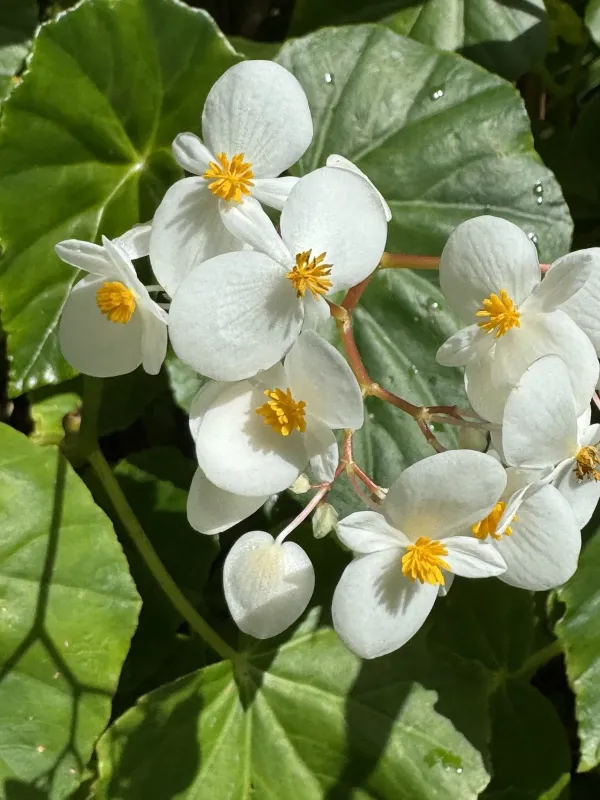
Description
Sowing dates
The wax begonia (Begonia Semperflorens-Cultorum Group) belongs to the Begoniaceae family. In commercial production, seeds are sown in late winter to ensure early flowering.
The seeds are extremely fine and should be sown on the surface of a light, peat-based mix. They require light to germinate and should not be covered with soil.
High humidity and temperatures around +22°C to +25°C are essential for successful germination, which usually occurs within two weeks.
Seedlings need supplemental lighting in northern climates to develop strong stems. Early care involves thinning or transplanting into small cells for root development.
Hardening off the plants before transplanting to outdoor garden beds is crucial to ensure they can withstand environmental changes without significant shock.
Growing requirements
Wax begonias are versatile plants that grow well in full sun to partial shade. In extremely hot climates, they prefer afternoon shade to prevent leaf scorching.
The soil must be well-drained and slightly acidic, with plenty of organic matter. Poorly drained soil significantly increases the risk of root pathogens.
Consistent moisture is key, although the plants should be allowed to dry slightly between waterings to prevent root system suffocation and decay.
These plants are sensitive to frost and cold winds. They thrive best at temperatures between +18°C and +26°C throughout the growing season.
Regular fertilization with a balanced liquid fertilizer is recommended every two weeks to maintain continuous blooming and vigorous foliage growth.
Main diseases and pests
Powdery mildew is the most common fungal problem, appearing as a white, powdery layer on leaves, often triggered by poor air circulation and high humidity.
Botrytis blight (gray mold) can cause rotting of stems and flowers if the foliage remains wet for extended periods in humid weather conditions.
Pests such as aphids and spider mites are frequent invaders. Mites, in particular, can be difficult to detect until the plant starts to show signs of stunting.
Fungus gnats may become an issue in nursery settings if the growing medium remains overly wet for a long time, damaging young root hairs.
- Ensure spacing for proper airflow.
- Avoid overhead watering to keep foliage dry.
- Use systemic insecticides only when necessary.