
King begonia
Begonia rex-cultorum L. H. Bailey
Description
Growing requirements
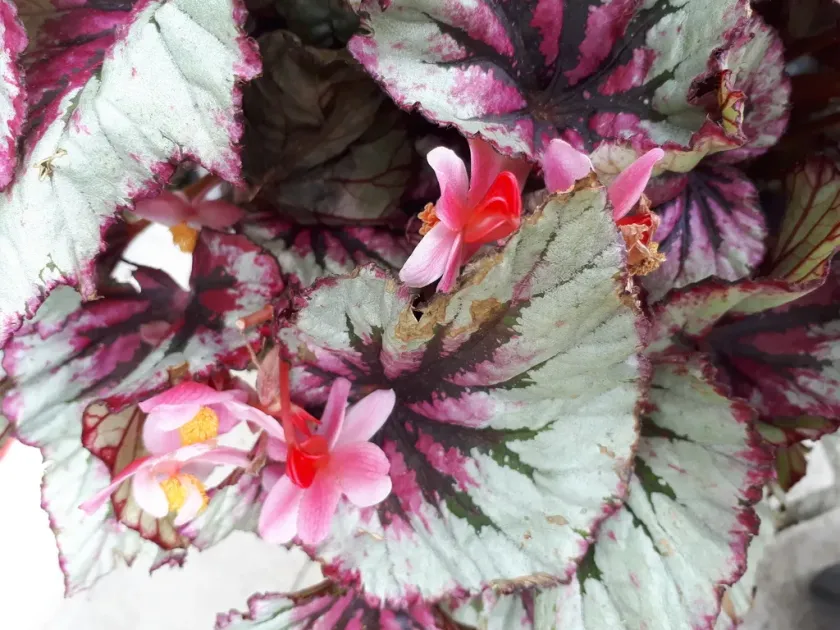
The King begonia (Begonia rex-cultorum) is a popular ornamental plant belonging to the Begoniaceae family. Known for its spectacular foliage, it is prized in horticulture for the intricate colors and textures found on its large, asymmetrical leaves.
This species requires a consistent environment with temperatures ranging from 18 to 24 degrees Celsius. It is highly sensitive to cold drafts and sudden changes in temperature, which can stress the plant and lead to leaf drop.
Success in cultivation relies on a well-draining, slightly acidic substrate. A mix rich in peat and perlite or coarse sand is recommended to maintain the necessary aeration for the roots while providing consistent moisture.
Regarding light requirements, the plant thrives in bright, indirect light. Exposure to direct sun will cause rapid leaf scorching, while deep shade will result in loss of color saturation and elongated, weak growth.
Humidity management is critical for this species. While it needs high ambient humidity, water should only be applied to the soil to prevent fungal infections. Regular monitoring of the soil moisture is essential to prevent waterlogging.
Main diseases and pests
The primary threats to King begonia include powdery mildew and botrytis blight. These fungal diseases flourish in environments with poor air circulation and high humidity levels.
Root rot remains the most significant threat caused by overwatering or poor drainage. Once the roots are compromised, the entire plant structure quickly deteriorates and becomes difficult to recover.
Common pests such as spider mites and mealybugs frequently attack the foliage. These pests thrive in dry conditions and can cause significant damage to the plant's aesthetic and biological health.
Effective management includes regular inspection of the underside of leaves. Early detection is key to controlling infestations before they spread throughout the entire collection.
Integrated pest management strategies should be employed, utilizing soaps or specific systemic insecticides when necessary. Keeping the area clean and removing debris helps minimize the risk of recurring infestations.