
Thalictrum delavayi
Thalictrum delavayi Franch. x Thalictrum rochebruneanum Franch. & Sav.
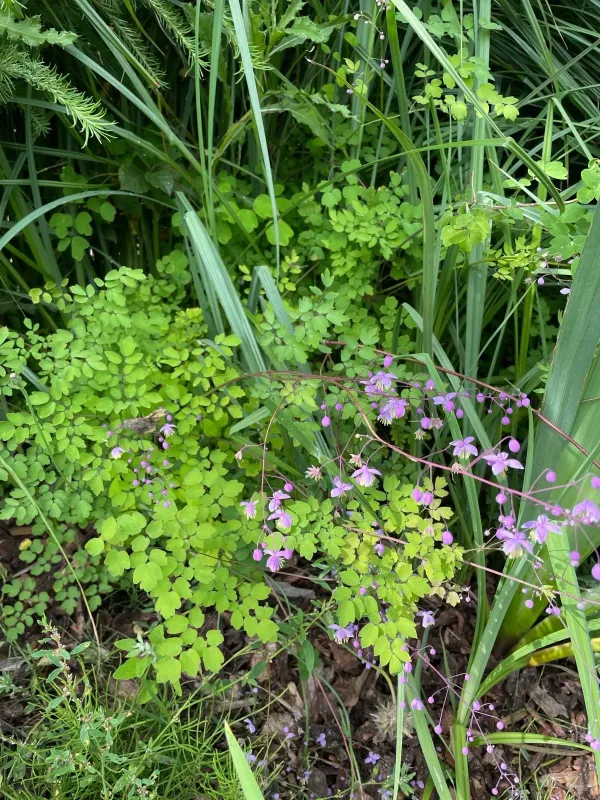
Description
Sowing dates
Thalictrum delavayi can be propagated through seeds or by dividing established clumps in early spring when the plant is just starting to produce new growth.
Seeds require a period of cold stratification to break dormancy; therefore, sowing them in late autumn outdoors or using a refrigerator for artificial stratification is essential.
When starting seeds indoors, ensure the substrate remains moist but not waterlogged, and provide bright, indirect light to support healthy seedling development.
Clump division should be performed carefully, ensuring each segment has a healthy portion of roots and several growth buds to facilitate quick establishment.
Spacing is critical when transplanting, as the mature plant can reach significant heights and widths, necessitating enough room for air circulation around the foliage.
Growing requirements
As a member of the Ranunculaceae family, Thalictrum delavayi is a refined perennial valued for its delicate, fern-like foliage and airy, lavender-colored flower sprays.
The ideal environment for this crop is a site with partial shade, sheltered from harsh afternoon sun that can scorch the foliage and dry out the root zone.
Rich, humus-heavy, and consistently moist soil is required; incorporating well-rotted organic matter into the planting area significantly boosts plant vigor.
Though the plant prefers steady moisture, it requires excellent drainage to prevent root suffocation, especially during periods of heavy seasonal rainfall.
Mulching the base of the plant with organic materials like leaf mold helps retain soil moisture, stabilizes soil temperature, and provides slow-release nutrients.
Main diseases and pests
Powdery mildew is the most common disease associated with this plant, typically appearing in mid-summer if the atmosphere is humid and stagnant.
Root rot can occur if the plant is grown in overly heavy or waterlogged soils, which prevents oxygen from reaching the root system effectively.
Insect pests, including aphids and spider mites, are frequent visitors that target the tender succulent parts of the foliage, often appearing during hot and dry spells.
Regular monitoring of the foliage and implementing good garden hygiene, such as removing fallen debris, helps prevent the buildup of pest populations.
In cases of severe infestation, using appropriate horticultural oils or systemic fungicides can protect the plant's health and maintain its aesthetic appeal.