
Thalictrum aquilegiifolium
Thalictrum aquilegiifolium L.
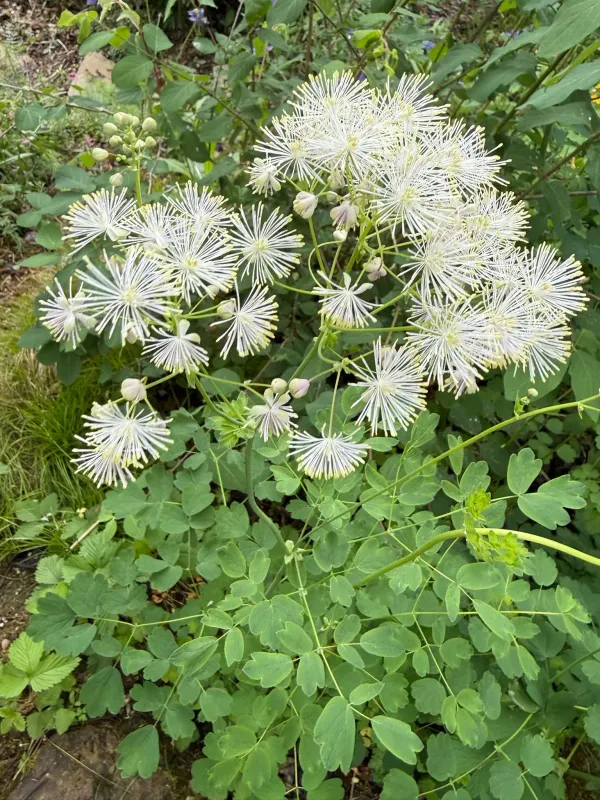
Description
Sowing dates
Seeds of Thalictrum aquilegiifolium require a cold stratification period to break dormancy, making autumn sowing highly effective for uniform spring germination.
When sowing in spring, it is necessary to artificially stratify seeds by storing them in moist conditions at temperatures around 4°C for several weeks.
The seeds should be sown thinly on the surface of well-drained, moist potting mix and covered lightly with a thin layer of fine vermiculite or grit.
Seedlings need to be kept in a cool, bright location away from direct sunlight while maintaining consistent moisture levels in the growing medium.
Transplanting is best performed in the spring when the plants have reached a robust size, ensuring that the root ball remains undisturbed during relocation.
Growing requirements
Belonging to the Ranunculaceae family, the columbine meadow-rue is a perennial herbaceous plant recognized for its elegant, columbine-like foliage.
It thrives in semi-shaded environments and is particularly suitable for woodland garden settings or areas with dappled sunlight throughout the day.
Rich, moisture-retentive, yet well-drained soil is essential for optimal growth, as the plant suffers quickly in dry, sandy, or nutrient-poor substrates.
Regular irrigation is vital, especially during the active growth and flowering phases, to prevent the foliage from wilting or turning brown prematurely.
The plant demonstrates excellent winter hardiness and does not require special winter protection, making it a reliable choice for temperate climates.
Main diseases and pests
Powdery mildew is the most common fungal disease, typically occurring during humid, still weather when there is insufficient air circulation.
Aphids and spider mites are frequent pests that can cluster on the underside of leaves, sapping nutrients and causing visible stress to the plant.
Poor soil drainage can lead to root rot, especially in stagnant wet conditions, which can quickly prove fatal to the entire plant structure.
Integrated pest management, including the use of horticultural oils or insecticidal soaps, is recommended when pest populations become noticeable.
Maintaining proper spacing between individual plants is the best cultural practice to prevent the spread of diseases and pests in a garden or nursery.