
Sugarcane
Saccharum officinarum L.
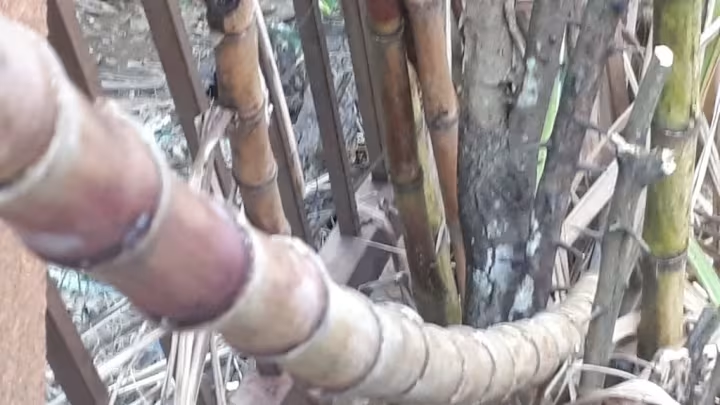
Description
Sowing dates
Sugarcane (Saccharum officinarum L.) is a tall, perennial grass belonging to the Poaceae family, widely cultivated in tropical and subtropical regions. Its stems, or stalks, are rich in sucrose, making it the primary commercial source of natural sugar in the global market.
The plant originates from Southeast Asia and has adapted to a variety of tropical environments. It forms dense clumps of stalks that can reach up to 6 meters in height. Unlike many other crops, sugarcane is propagated vegetatively using stem cuttings rather than seeds in standard agricultural practices.
To establish a plantation, farmers select healthy stalks and cut them into sections, which are then placed in furrows. Successful germination depends on soil moisture and temperature, as the buds at each node of the cane cutting require warmth to sprout and develop into a new stool.
Planting typically aligns with the beginning of the rainy season to minimize the need for supplemental irrigation during the critical early growth stage. Proper spacing between rows is essential to ensure maximum sunlight penetration, which drives photosynthesis and sugar accumulation.
Once established, the crop demonstrates vigorous growth, often requiring minimal weeding after the initial period. The ability to "ratoon"—that is, regenerate from the existing root system after harvesting—allows for multiple harvests over several years from a single planting.
Growing requirements
Sugarcane demands a warm climate with optimal temperatures ranging from 22°C to 30°C. It is extremely sensitive to frost, which can kill the growing tips and halt sugar accumulation, making it unsuitable for regions with cold winters.
Soil requirements include deep, fertile, and well-drained loam or alluvial soils. Poorly drained or waterlogged ground should be avoided as it hinders root respiration and can lead to stalk rot, significantly reducing both biomass yield and sucrose content.
Water management is the most critical factor for productivity, requiring high annual rainfall or reliable irrigation systems. Sufficient water is necessary for the transport of metabolites and the maintenance of high turgor pressure within the plant's vascular tissues.
Industrial utilization is diverse, extending well beyond food production. The byproduct molasses is essential for ethanol and rum production, while the fibrous bagasse residue is used as a renewable fuel source for sugar mill boilers and in paper pulp manufacturing.
Nutrient management involves applying significant quantities of nitrogen, phosphorus, and potassium. Potassium is particularly vital for enzymatic processes related to sugar synthesis and for improving the plant’s resistance to lodging and environmental stressors.
Main diseases and pests
Major pests of the crop include stem borers, mealybugs, and various root-feeding insects that damage the plant's internal structure. Effective management involves integrated pest control strategies, including the use of pheromone traps and beneficial parasitic insects.
Disease pressures are primarily driven by fungal infections like red rot and pineapple disease, which can cause significant tissue necrosis. Viral diseases like mosaic virus also pose a risk to yield and sugar quality if not managed through rigorous crop sanitation.
To combat these threats, agronomists emphasize the use of disease-free, certified seed cane and the implementation of crop rotation cycles. Regular scouting for early symptoms of infection is crucial to prevent the spread of pathogens across a large-scale plantation.
Breeding programs are continuously working to develop high-yielding, disease-resistant varieties. These modern cultivars often feature improved sugar concentration and better adaptation to specific localized soil types and environmental stresses found in major production regions.
Harvesting timing is critical and based on field testing of juice maturity. Once harvested, the stalks must be processed rapidly, usually within 24 to 48 hours, to prevent the breakdown of sucrose into simple sugars due to enzymatic inversion, which significantly lowers production efficiency.