
Sugarcane
Saccharum hybr.
Description
Sowing dates
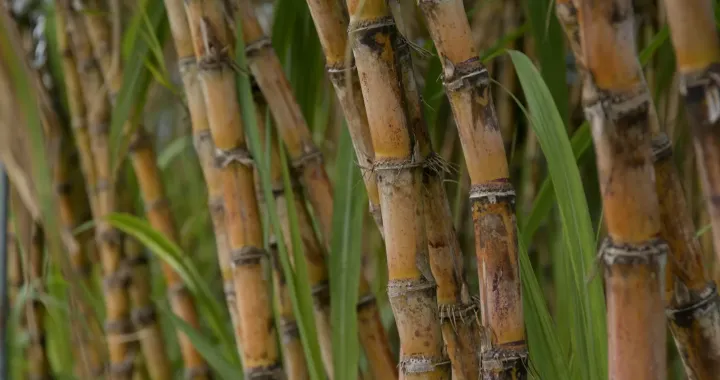
Sugarcane is a perennial grass of the Poaceae family, specifically a complex interspecific hybrid known as Saccharum hybr.
The propagation of this crop is primarily vegetative, achieved by planting sections of stalks into prepared furrows in the soil.
The timing of planting varies depending on the specific climate zone, usually aligning with the onset of the wet season to ensure successful establishment.
Planting density is crucial for yield optimization, with typical rates ranging from 10,000 to 15,000 stalks per hectare.
Once harvested, the root systems remain in the ground to regenerate new stalks, a practice known as ratooning, which allows for multiple harvests from a single planting.
Growing requirements
Sugarcane is a tropical plant that requires consistently warm temperatures, ideally between 25 and 30 degrees Celsius, for vigorous growth.
The crop is highly sensitive to frost, which limits its geographical cultivation area primarily to tropical and subtropical regions across the globe.
High moisture levels are essential for development, necessitating effective irrigation systems in areas where rainfall is seasonal or inadequate.
The ideal soil conditions include deep, well-drained, and fertile soils with a neutral pH, providing a robust foundation for the plant's extensive root system.
Ample sunlight is vital for the photosynthetic process, which is directly linked to the accumulation of sucrose in the stalks during the maturation phase.
Yield
Sugarcane is recognized as one of the world's most productive crops, with yields often reaching between 100 and 150 tonnes of biomass per hectare.
Sucrose content in the stalk juice is the primary metric for quality, typically ranging between 10% and 15% depending on the specific hybrid variety.
Sustainable productivity is achieved through balanced nutrient management, including the precise application of nitrogen, phosphorus, and potassium fertilizers.
Advancements in modern breeding have led to the development of higher-yielding varieties that are more resilient to environmental stressors.
Beyond sugar, the industry utilizes by-products like bagasse for energy production, adding significant economic value to the crop's output.
Main diseases and pests
Insect pests, such as the sugarcane borer, pose a significant threat by damaging internal tissues and reducing overall sucrose yield.
Pathogens like red rot and smut are prevalent fungal diseases that can cause severe damage if moisture and airflow are not managed properly.
Integrated Pest Management (IPM) strategies, including biological controls and selective chemical applications, are standard practice in professional cultivation.
Ensuring the use of disease-free planting material is the first and most critical line of defense against the spread of systemic infections.
Regular field scouting is essential during the rapid growth phase to detect early signs of infestation and apply corrective measures before widespread damage occurs.
Harvesting
The harvest period is determined by the peak level of sucrose in the stalks, which occurs just before the transition into the cooler or dry season.
Mechanical harvesters are commonly used to cut the stalks at the base, streamlining the process and reducing the reliance on manual labor.
Time management is critical during the harvest; sugarcane must be processed quickly after cutting to prevent the inversion of sucrose and fermentation.
Controlled burning of dry leaf material is often employed prior to harvest to improve access for machinery and increase operational efficiency.
Following the harvest, the fields are managed to encourage the next ratoon crop, ensuring a sustainable cycle for three to five years before replanting is required.