
Barber sugarcane
Saccharum barberi Jeswiet
Description
Growing requirements
Barber sugarcane (Saccharum barberi) is a perennial herbaceous plant belonging to the Poaceae family. This species originates from the subtropical regions of Northern India, which makes it hardier and more tolerant to cooler climates than many other commercial sugarcane species.
The plant thrives in deep, fertile, loamy soils that possess excellent drainage. While it requires significant moisture for active growth, waterlogging of the root zone must be avoided at all costs, as it negatively impacts plant health and can trigger rot.
A long frost-free season with intense solar radiation is essential for the physiological processes required to accumulate sucrose. In areas where sunlight is limited, the sugar content in the stalks remains low, rendering the crop economically non-viable.
Agricultural management requires deep plowing to facilitate root penetration. The application of organic amendments and balanced nitrogen-potassium fertilizers is a prerequisite for high biomass production throughout the growing season.
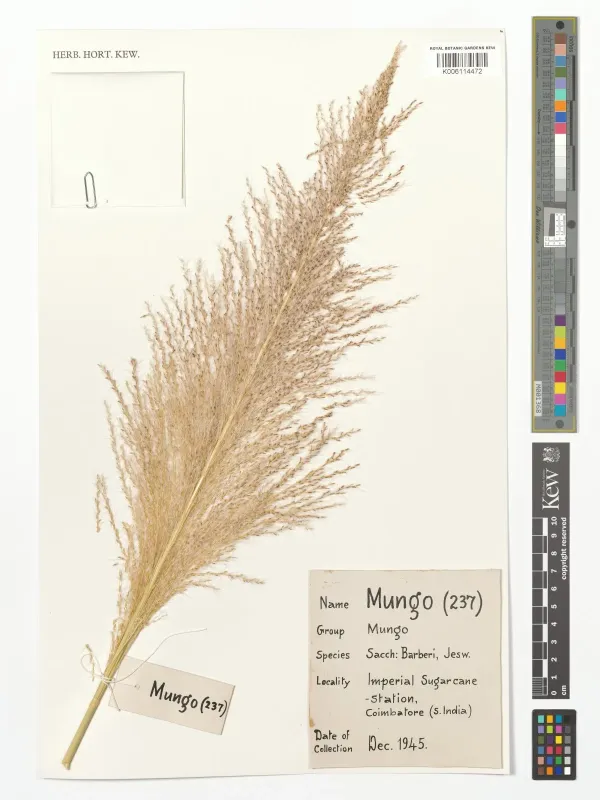
Botanically, Saccharum barberi is characterized by relatively thin but dense stalks. Its ability to tiller effectively allows the crop to maintain a dense stand, which is crucial for maximizing yield per hectare.
Yield
Yield stability in Barber sugarcane is highly dependent on strict adherence to irrigation schedules and nutrient management. In optimal conditions, the species demonstrates reliable production levels suitable for large-scale industrial processing.
The total yield is measured by both the volume of harvested stalks and the sucrose content within the extracted juice. Agronomists monitor the maturation process closely to determine the precise window for harvest to ensure peak sugar extraction.
The utilization of the harvested crop extends beyond sugar and molasses production. The fibrous remains, known as bagasse, are a valuable byproduct utilized as a renewable fuel source in biomass power plants.
Field management involves systematic rotation and periodic replanting of cane fields. As a plantation ages, individual stalks become less productive, necessitating renewal to maintain profitable output levels.
Research and breeding efforts continue to focus on enhancing the cold tolerance and disease resistance of this species to expand its cultivation range into marginal subtropical zones.
Main diseases and pests
Stem borers are considered the primary pests affecting this crop. These insects penetrate the stalk, causing physical damage and creating entry points for secondary fungal and bacterial infections.
Red rot is a significant disease that frequently affects Saccharum barberi. Once infected, the internal tissues of the stem break down, significantly reducing the purity and volume of the extracted juice.
Root rot diseases occur primarily in poorly drained fields or during prolonged periods of excessive rainfall. These pathogens impair nutrient uptake, leading to stunted growth and premature yellowing of the foliage.
Viral infections, including sugarcane mosaic virus, represent a persistent threat. These diseases are usually transmitted by sap-sucking insects like aphids, which are common in many sugarcane-growing regions.
Effective weed control during the early stages of establishment is critical. Because young sugarcane plants grow relatively slowly at first, early competition from aggressive weeds can cause severe yield losses.