
Chinese sugarcane
Saccharum sinense Roxb.
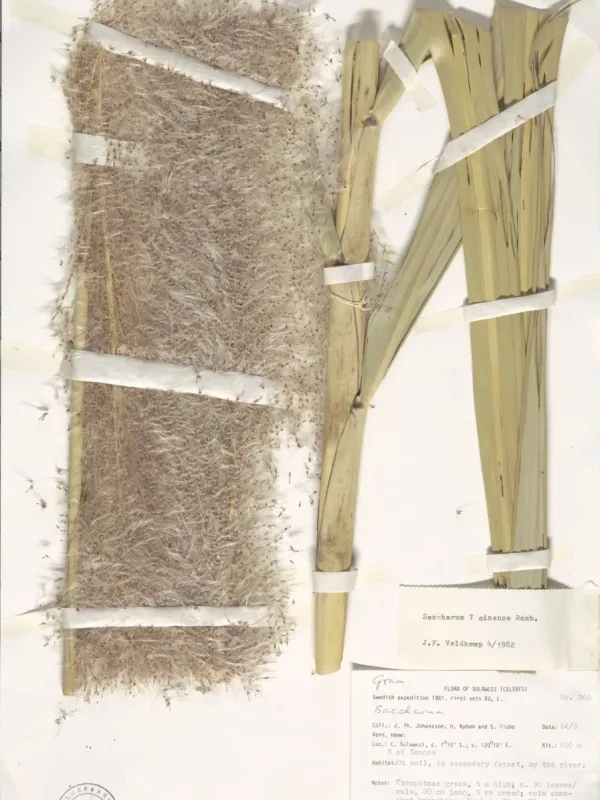
Description
Growing requirements
Chinese sugarcane (Saccharum sinense Roxb.) is a prominent member of the Poaceae family, widely cultivated in subtropical and tropical regions of Asia. It is valued for its ability to adapt to diverse environments and its high efficiency in converting sunlight into stored sugars.
The plant thrives in regions with consistently high temperatures and adequate precipitation throughout the growing season. While it is more tolerant of varying conditions than some other commercial varieties, it still requires significant solar radiation to maximize sugar accumulation in the stalks.
Deep, fertile soils with efficient drainage are essential for optimal performance. The crop responds well to intensive fertilization, particularly nitrogen and potassium, which are crucial for developing the robust stalk structure and high juice quality required for industrial processing.
Botanically, it is defined by its tall, fibrous stems that are typically thinner than those of other species. The plant grows in clumps, and its root system is extensive, allowing it to remain productive over multiple years if managed correctly, often harvested as a ratoon crop.
In addition to sugar production, the stalks are a significant source of raw material for the paper and ethanol industries. The processed residues are utilized in livestock feed and as a reliable, carbon-neutral fuel source in agricultural manufacturing plants.
Main diseases and pests
Significant threats to production include fungal diseases such as smut and red rot, which can devastate the quality of the juice if not contained. Producers must monitor fields for early signs of infection and remove affected plant material promptly to stop spread.
Insect pests like the sugarcane borer represent a constant challenge for farmers. These pests tunnel into the stalks, weakening the plant's structure and creating entry points for secondary infections, necessitating a balanced approach of biological and chemical pest management.