
Wild sugarcane
Saccharum spontaneum L.
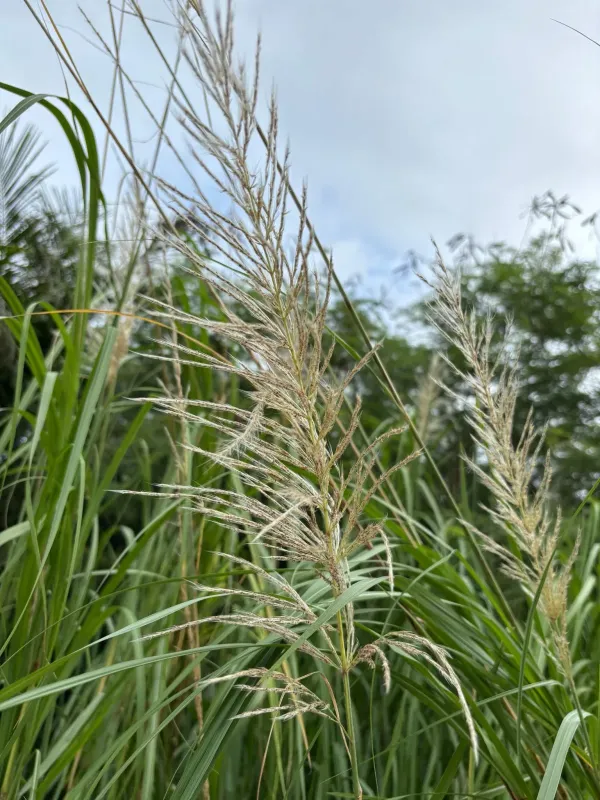
Description
Sowing dates
Wild sugarcane is a perennial grass that primarily propagates through an extensive network of underground rhizomes. While it produces small, wind-dispersed seeds, its rapid spread is mainly driven by the vegetative division of its root system.
In a field context, it is rarely sown intentionally and is often managed as a persistent weed. Germination of seeds typically occurs in moist, warm conditions following the rainy season, allowing seedlings to establish quickly in open areas.
For research and breeding purposes, seeds are sown in controlled greenhouse conditions with consistent temperatures between 25 and 30 degrees Celsius. Propagation from rhizome segments is the standard method for cultivation in experimental plots.
The plant demonstrates aggressive growth early in the season, which allows it to colonize new ground rapidly. Its ability to regrow from small fragments makes it highly resilient to traditional shallow tillage practices.
Effective control requires management strategies that address both the seed bank and the long-lived rhizomes. Integrated approaches involving chemical and mechanical control are necessary to limit its spread.
Growing requirements
Saccharum spontaneum belongs to the Poaceae family and is known for its remarkable environmental adaptability. It thrives in various soil types, including sandy, silty, and heavy clay soils, showing a preference for high-moisture environments.
The plant is highly tolerant of flooding and is frequently found along riverbanks, in wetlands, and in waterlogged depressions. It requires ample sunlight for optimal photosynthesis and rapid expansion.
It prefers tropical and subtropical climates, where it grows vigorously throughout the year. While it can withstand periods of drought due to its deep root system, it is most prolific in areas with high rainfall and warm temperatures.
The species is a significant nutrient competitor, extracting nitrogen and phosphorus from the soil with high efficiency. Its ability to thrive in poor soils often makes it a dominant species in disturbed land areas.
As an agricultural weed, it creates dense stands that can shade out other crops and compete for water resources. Its presence is often an indicator of poorly managed or frequently disturbed soil conditions.
Main diseases and pests
Wild sugarcane is generally resistant to many common pests due to the high silica content in its leaves and stems, which provides a physical barrier against insect herbivory.
However, like most grasses, it can be susceptible to specific pathogens under high-humidity conditions, such as rust diseases or fungal infections that affect the leaf blades and stems.
Some species of stem borers may target the stalks, and various nematode species can infest the root system, potentially reducing the vigor of dense stands over time.
Managing the plant usually involves the use of systemic herbicides, as localized mechanical removal often fails to destroy the entire rhizome network. Regular monitoring is essential to prevent re-establishment.
In extreme cases, biological control methods or repeated deep plowing are employed to exhaust the carbohydrate reserves in the rhizomes and prevent the plant from dominating agricultural areas.
Harvesting
The primary economic value of wild sugarcane is its use in commercial sugarcane breeding programs. It provides valuable genetic traits, such as drought resistance and disease tolerance, to hybrid varieties.
In addition to breeding, the plant is utilized for erosion control along riverbanks, where its deep root system binds the soil and prevents washout during seasonal flood events.
There is increasing interest in using Saccharum spontaneum as a biomass feedstock for energy production. Its high dry matter yield and rapid growth rate make it a candidate for sustainable fuel development.
Harvesting for biomass is typically carried out before the onset of the flowering phase to ensure that energy content is concentrated in the vegetative parts of the plant.
After harvesting, land preparation must be thorough. Because the plant readily regenerates from subterranean buds, follow-up management is required to ensure the cleared land can be used for subsequent crop cycles.