
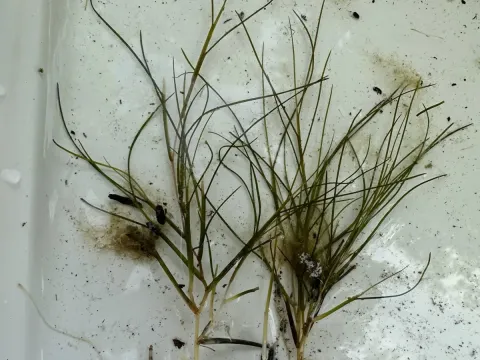
Stuckenia
Stuckenia
Stuckenia is a genus of aquatic plants belonging to the Potamogetonaceae family. These are perennial hydrophytes that spend their entire life cycle submerged in water, anchoring themselves to the bottom substrate.
What the section contains

Stuckenia
The genus is distributed globally across various climates. They are typically found in ponds, lakes, and slow-moving streams where the water quality supports diverse aquatic vegetation.
Substrate requirements include nutrient-rich silt or sandy sediments. These sediments allow the root system to absorb essential minerals, which is vital for the plant's sustained growth and propagation.
Light availability is the primary factor for growth. These plants thrive in shallow to moderately deep water where solar penetration is sufficient to fuel the process of photosynthesis for biomass production.
Water chemistry, specifically pH balance and oxygen levels, dictates the health of the population. A stable, well-oxygenated aquatic environment ensures the plant maintains its structural integrity throughout the growing season.
While not a traditional agricultural crop, Stuckenia provides significant biomass that can be harvested for secondary uses. In many regions, this organic material is valued as a green fertilizer for agriculture.
The nutritional profile of Stuckenia biomass makes it an interesting resource for composting. Once decomposed, it adds organic matter and trace minerals to the soil, improving its overall water-holding capacity.
In aquaculture, the presence of Stuckenia is a proxy for high ecosystem productivity. It serves as a biological filter, stabilizing the sediment and providing a habitat for the microorganisms that sustain larger fish populations.
The harvest of these plants must be managed carefully. Sustainable extraction methods allow for the collection of excess growth, which can then be repurposed without causing negative impacts on the aquatic ecosystem.
Ongoing research focuses on the potential of aquatic biomass as a feedstock for bio-industrial applications, leveraging the rapid growth rates characteristic of this genus in suitable environments.
Eutrophication is the most significant threat to Stuckenia populations. Excessive nutrient runoff from farms leads to algal blooms, which outcompete the plants for essential sunlight and oxygen.
Various aquatic pests, including larvae of specific beetle species, can feed on the foliage. Under favorable conditions, these pests can reduce the density of the beds significantly during the summer months.
Fungal pathogens represent another risk factor, particularly when the water temperature fluctuates drastically or when there is insufficient water movement to flush out stagnant zones.
Pollution from agricultural chemicals, including herbicides and pesticides, can cause acute toxicity to the plant's delicate tissues, often leading to die-off events in areas adjacent to farmland.
Physical disruption, such as dredging or intense boat traffic, can mechanically tear the plant stalks, creating entry points for opportunistic pathogens that may spread throughout the entire submerged colony.