
Striped pondweed
Stuckenia striata
Description
Growing requirements
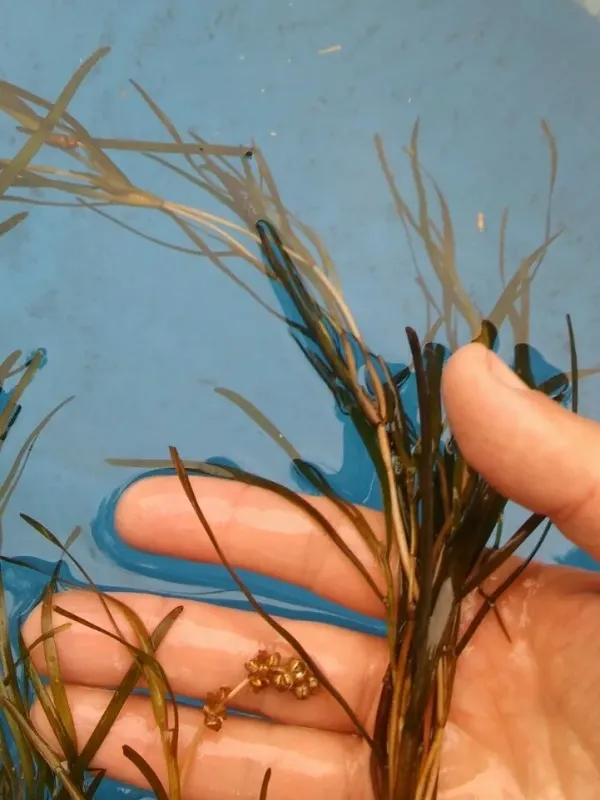
Stuckenia striata, commonly known as striped pondweed, is a perennial aquatic plant belonging to the Potamogetonaceae family. It is a true hydrophyte, adapted to spend its entire life cycle submerged in freshwater or brackish aquatic environments.
The species is primarily found in temperate and subtropical regions of South America. It thrives in stagnant or slow-moving water bodies, such as ponds, lagoons, and streams, where it forms dense, submerged vegetative mats.
The plant requires high water clarity to ensure sufficient photosynthetic activity. Sunlight penetration is the critical limiting factor for its survival, especially in deeper parts of the water column.
Soil composition plays a vital role in its growth. Stuckenia striata prefers nutrient-rich organic sediments, silty or clayey bottoms, which allow for a strong root attachment and efficient nutrient uptake from the substrate.
Botanically, the plant is characterized by its linear foliage and unique stipules that provide buoyancy. These physical traits allow it to withstand water currents and maintain its position in the aquatic vegetation structure.
Main diseases and pests
Eutrophication is the primary threat to Stuckenia striata populations, as increased nutrient levels trigger algal blooms that reduce water transparency and effectively choke the plant.
The species is vulnerable to herbivory by various fish and aquatic invertebrate populations, which, in high densities, can cause significant damage to the plant's stems and leaves.
Chemical contamination, particularly the runoff of herbicides and pesticides from adjacent agricultural lands, poses a lethal risk to the plant's metabolic processes and overall growth rates.
Pathogenic organisms, including various aquatic fungi, can target the plant's root system in environments where water circulation is poor and oxygen levels are consistently low.
Anthropogenic alterations to water bodies, such as dredging or significant fluctuations in water levels due to dam management, can physically destroy the habitat required for healthy plant colonization.