
Tamarugo
Strombocarpa tamarugo
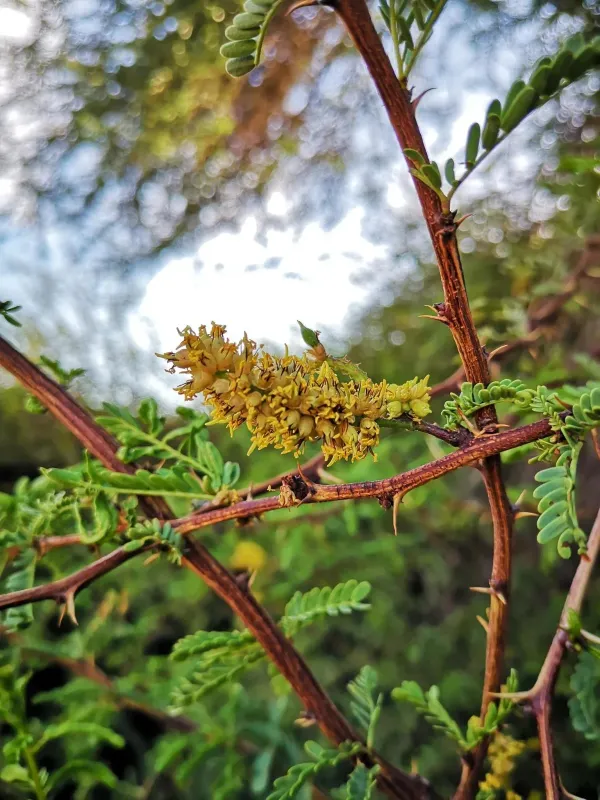
Description
Sowing dates
Propagation of Strombocarpa tamarugo is primarily achieved through seeds or nursery-grown seedlings. Due to the hard seed coat, scarification (either mechanical or chemical) is often required before planting to break dormancy and ensure uniform germination.
The ideal time for transplanting seedlings is at the beginning of a rainy season (if applicable) or during mild temperature months to allow the root system to establish before extreme heat.
When direct seeding in the field, it is crucial to provide consistent irrigation during the initial growth phase until the taproot reaches deep groundwater aquifers.
Seeds are typically sown at a depth of 2 to 4 centimeters, which provides sufficient moisture protection while allowing for adequate seedling emergence.
Planting density depends on the final use: wider spacing is used for forestry and windbreaks, while denser spacing is preferred for creating managed silvopastoral systems.
Growing requirements
Tamarugo is a remarkable member of the Fabaceae family, capable of thriving in the extreme, arid environment of the Atacama Desert in Chile.
The species is highly resilient to poor soil quality and can successfully grow in saline or alkaline soils where most other agricultural crops would perish.
A primary requirement for its survival is access to groundwater, as the tree relies on an extensive, deep root system to extract moisture from deep layers when surface water is unavailable.
The plant demonstrates exceptional tolerance to high temperatures and intense solar radiation, making it a critical asset for agriculture in desert landscapes.
The optimal temperature range for vegetative growth is between 20 and 35 degrees Celsius, although mature trees show remarkable endurance against occasional night frost.
Yield
The economic value of Tamarugo is primarily tied to livestock production, as its fruits and foliage provide a protein-rich and sugar-dense fodder source.
The biomass of leaves and pods serves as essential nutrition for sheep and goats, enabling livestock management in otherwise barren desert regions.
The wood of the Tamarugo tree is highly valued for its density and durability, making it an excellent material for construction and high-quality woodwork.
The plant plays a vital ecological role by fixing atmospheric nitrogen through symbiosis with root bacteria, which improves soil fertility in degraded areas.
Fruit yield from a single mature tree can be substantial under proper management, provided the tree has access to groundwater during the fruit-set period.
Main diseases and pests
The main threats to Tamarugo populations are primarily anthropogenic, such as overgrazing, which prevents the natural regeneration of seedlings in the desert environment.
Pests, particularly specific species of weevils, can infest the pods and seeds, significantly reducing both their nutritional value and their viability for reforestation.
Fungal pathogens may compromise the root system if the moisture balance is severely disrupted or if soil conditions become waterlogged, which is rarely an issue in native habitats.
Fluctuations in the water table represent a critical threat to established stands, as the trees are fully dependent on these permanent deep-water sources for survival.
Poor agricultural practices and soil compaction around the trunk base can lead to weakened tree health, increasing susceptibility to secondary environmental stresses.
Harvesting
Harvesting Tamarugo pods is usually performed manually or by gently shaking the branches onto mats spread under the canopy of the tree.
The optimal harvest window occurs when the pods reach full maturity, indicated by a characteristic color change and peak sugar concentration within the pulp.
After collection, pods require sun-drying to reduce moisture content, preventing fungal growth and spoilage during storage in warehouse environments.
Foliage can be harvested through carefully managed pruning, which serves the dual purpose of gathering animal feed and shaping the tree crown for better growth.
Organized harvesting methods allow for the storage of high-energy forage, which is vital for maintaining livestock health during the driest seasons of the year.