
Strombocarpa strombulifera
Strombocarpa strombulifera
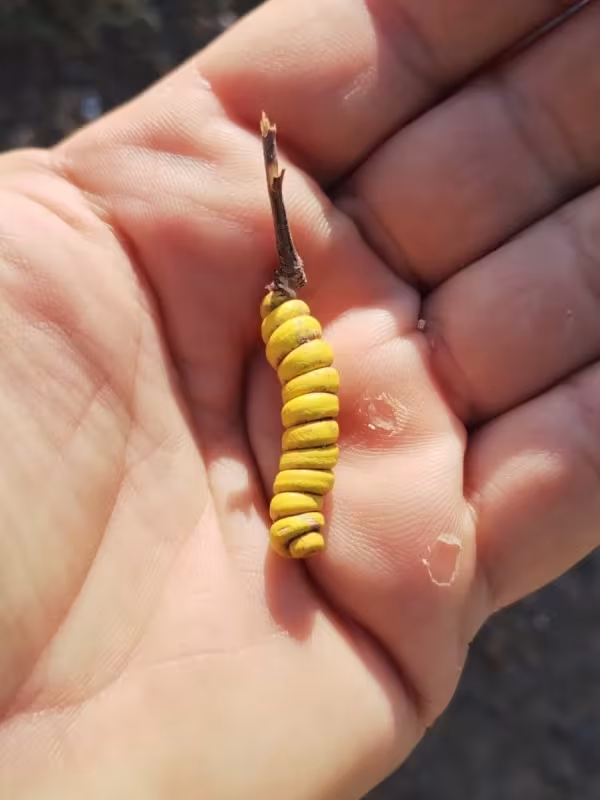
Description
Growing requirements
Strombocarpa strombulifera, often classified within the Fabaceae family, is a resilient shrub native to the arid regions of South America. It is specifically recognized for its adaptation to harsh environments, including highly saline and alkaline soils where few other species can thrive.
The plant originates from desert zones where it has evolved to utilize deep groundwater resources through an extensive taproot system. Its botanical structure is characterized by small, pinnate leaves and distinctive helical, screw-like pods that protect the seeds from environmental stressors.
Regarding climatic requirements, this species thrives in regions with intense sunlight and minimal precipitation. It is highly drought-tolerant, maintaining metabolic activity even during prolonged dry spells that would typically cause senescence in other agricultural crops.
Agricultural management of Strombocarpa strombulifera involves minimal input, as it is naturally optimized for nutrient-poor substrates. Its ability to fix atmospheric nitrogen is a key feature, making it a valuable candidate for soil restoration projects and the stabilization of marginal landscapes.
The economic value of this plant lies in its potential for forage production in arid climates and its role as a pioneer species in land reclamation. By improving soil structure and nitrogen content, it helps prepare degraded lands for more diverse plant cover over time.
Main diseases and pests
The primary threat to the health of Strombocarpa strombulifera is waterlogging. Excessive moisture in the soil profile leads to oxygen deficiency around the root zone, creating conditions favorable for root rot and other soil-borne fungal diseases that can compromise the plant's survival.
In terms of pests, the plant is subject to pressure from specialized insects such as seed-feeding weevils and certain grasshopper species. However, the plant's secondary metabolites generally provide a robust defense mechanism, keeping pest populations at manageable levels under natural field conditions.