
Strombocarpa palmeri
Strombocarpa palmeri
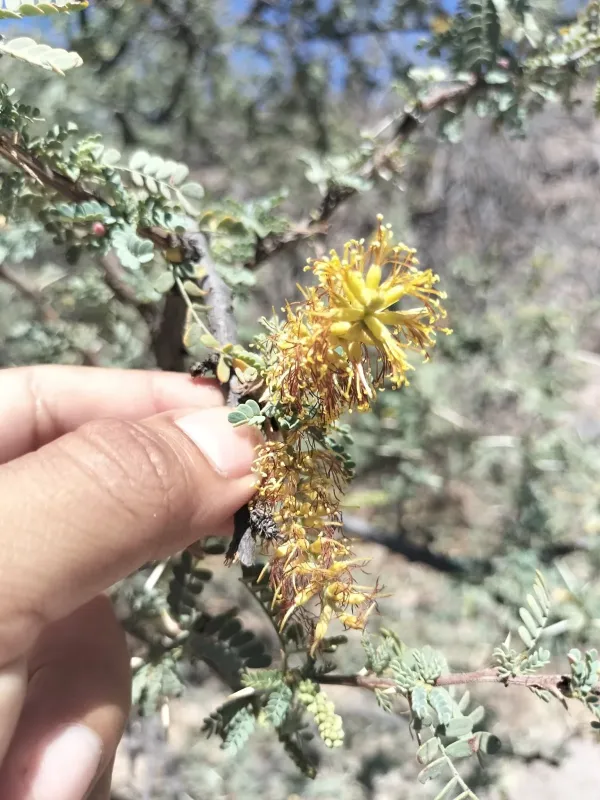
Description
Growing requirements
Strombocarpa palmeri, widely classified as a species within the Prosopis genus, belongs to the Fabaceae family. It is a desert-dwelling plant native to the arid landscapes of Baja California, where it has evolved to thrive under extreme environmental stress.
Botanically, this species manifests as a small tree with highly specialized xerophytic adaptations. Its small, pinnate leaves and hardened stems serve to minimize water loss, while its deep taproot system allows it to reach moisture reserves deep within the soil.
For successful cultivation, the plant requires exceptionally well-drained, porous soils. It is highly intolerant of waterlogging, which often leads to rapid decay of the root collar and susceptibility to soil-borne pathogens.
Climate requirements for this species are strictly arid. It requires high solar irradiance and daytime temperatures consistent with desert biomes. Cold or humid climates are generally unsuitable for its growth and development.
In terms of agricultural utility, Strombocarpa palmeri is valuable for soil stabilization and nitrogen fixation in arid regions. Its wood is locally prized for its density and durability, often used in rural construction and as fuel.
Main diseases and pests
The primary agricultural threat to Strombocarpa palmeri is root rot, typically caused by fungal pathogens when the drainage is insufficient. Careful soil moisture management is essential to prevent these infections.
Pest pressure is frequently attributed to bruchid beetles, which infest the pods and seeds. This can cause significant losses in yield if seeds are not monitored or treated correctly post-harvest.
Foliar diseases such as powdery mildew may occur if there is a sudden change in humidity or poor air circulation. While rarely fatal, they can hinder photosynthesis and slow down the plant's growth.
Sucking insects, including aphids or mites, may pose a risk during the early developmental stages of young plants. Monitoring of the foliage is recommended to ensure robust development.
Preventative measures should focus on environmental control rather than chemical intervention. Maintaining adequate spacing between trees is the best approach to mitigate disease transmission.