
Strombocarpa ferox
Strombocarpa ferox
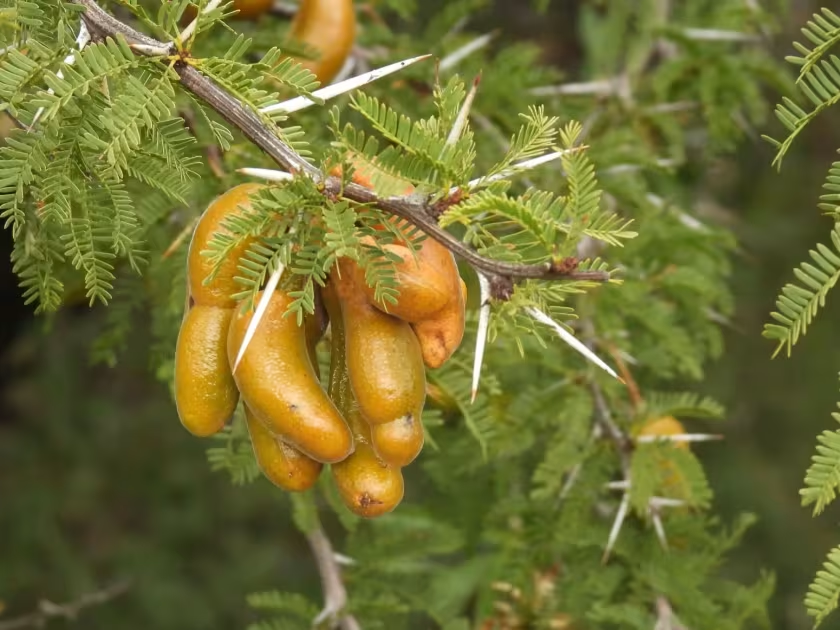
Description
Growing requirements
Strombocarpa ferox, commonly classified within the Fabaceae family and closely related to the genus Prosopis, is a hardy woody plant native to the high-altitude regions of the Andes. It is notably found in the challenging environments of Argentina and Bolivia, thriving where few other species can survive.
The plant is highly specialized for arid conditions, possessing deep root systems and protective thorns that reduce transpiration and herbivory. Its ability to withstand extreme thermal fluctuations and nutrient-poor, saline soils makes it a resilient component of its native ecosystem.
Botanically, it is characterized by its distinctively coiled, woody pods, which serve as a critical mechanism for seed dispersal and storage. The morphology of these pods is a key identifier for the species and is essential for understanding its reproduction cycle.
To cultivate Strombocarpa ferox, one must provide well-drained, sandy or gravelly soil profiles. The plant requires significant sunlight exposure and is extremely sensitive to waterlogging, making proper site selection and drainage management fundamental for its long-term health.
Minimalist agronomic management is sufficient for this species, as it is biologically optimized for harsh, low-input conditions. Maintenance primarily involves ensuring proper stand density and protecting younger specimens until they establish their root systems.
Yield
The productivity of Strombocarpa ferox is measured by its biomass accumulation under stress. In regions where traditional forage crops fail, this plant remains a reliable source of protein and carbohydrates, providing vital sustenance for livestock throughout the year.
Seed pods are the primary harvestable product, containing significant levels of sugars and minerals. They can be harvested and stored effectively, serving as a strategic feed reserve during dry seasons when natural pastures are depleted of essential nutrients.
The wood produced by this species is dense and durable, making it valuable for local construction, fencing, and the manufacture of artisanal agricultural tools. Its physical properties ensure long-term resistance to environmental decay.
Implementing Strombocarpa ferox in agricultural land management contributes to soil stabilization and water retention. By anchoring the soil on slopes, the plant actively prevents erosion and improves the microclimatic conditions for secondary species.
While not a commercial crop for global mass markets, its contribution to regional food security and land sustainability is significant. It represents an essential biological asset for farmers operating in semi-arid and high-altitude mountain environments.