
Strombocarpa burkartii
Strombocarpa burkartii
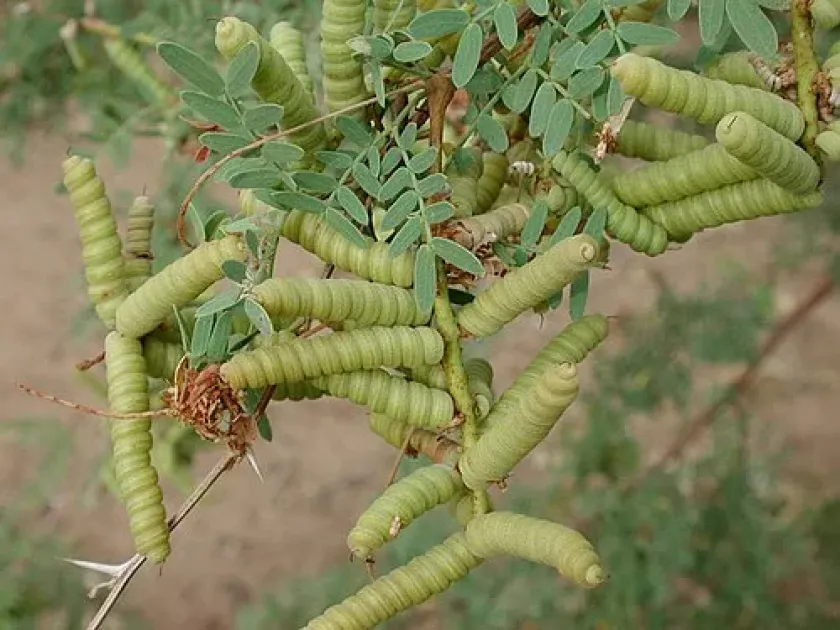
Description
Growing requirements
Strombocarpa burkartii is a distinctive woody perennial belonging to the Fabaceae family, native to the arid environments of South America. It is specifically adapted to survive in harsh ecological conditions where water availability is extremely limited.
The plant features a robust taproot system designed to extract moisture from deep soil horizons, allowing it to thrive in saline and nutrient-poor soils. This makes the species an excellent candidate for the reclamation of degraded and barren lands.
Botanically, the plant is characterized by thorny branches and resilient foliage, which act as protective mechanisms against herbivory and intense solar radiation. These morphological adaptations are critical for its survival in desert landscapes.
Climatic requirements are focused on high thermal sums and a significant amount of sunshine. It is strictly adapted to dry climates and requires well-drained, porous soils to maintain plant health and prevent the development of root-related issues.
The primary agricultural use of this crop is providing fodder for livestock in regions where conventional crops cannot survive. Furthermore, it plays a vital role in preventing desertification by stabilizing topsoil and improving soil structure over time.
Main diseases and pests
The main threats to the plant include specialized insect larvae that feed on reproductive parts, potentially limiting seed yield and natural propagation in agricultural settings.
Root zone pathogens are a significant risk if the soil moisture levels are consistently high, as the species lacks natural resistance to waterlogged conditions.
Invasive weed encroachment can outcompete younger plants for limited soil nutrients, necessitating early-stage management to ensure successful establishment.
Small mammals and rodents may cause mechanical damage to the bark and young shoots, especially during periods of extreme drought when other food sources are unavailable.
Occasional fungal outbreaks on the foliage can occur if there is unseasonal rainfall, leading to minor physiological stress for the host plant.