
Balloon berry
Rubus illecebrosus Focke
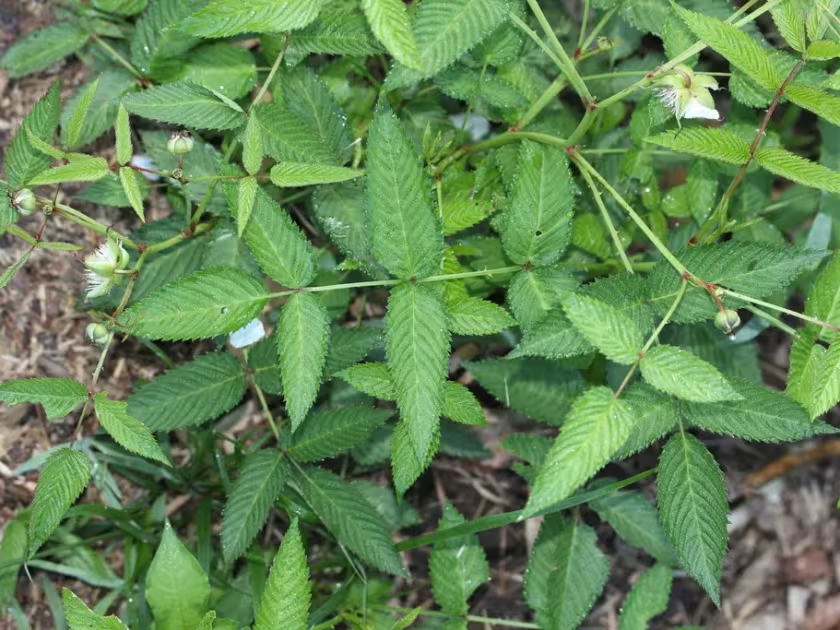
Description
Growing requirements
Balloon berry (Rubus illecebrosus Focke), also known as strawberry raspberry, belongs to the Rosaceae family. Native to East Asia, particularly Japan, this perennial subshrub is recognized for its unique appearance, featuring bright red, large fruits that resemble strawberries but are borne on thorny, arching stems.
For optimal growth, this crop requires full sun exposure to ensure high sugar content in the berries. It thrives in well-drained, fertile soil with a neutral or slightly acidic pH. Poorly drained soil is detrimental to the plant, as it promotes root rot and reduces overall plant vigor during the active growth season.
The climate requirements include a temperate growing season. Because the stems often die back to the ground in colder climates, the root system must be protected with mulch during winter to ensure reliable spring regrowth. Adequate moisture is crucial during the flowering and fruit-setting stages to maximize harvest potential.
Agronomic management involves periodic thinning of the stems and maintaining a weed-free environment. Since the plant spreads via rhizomes, it is essential to manage its expansion to prevent it from becoming invasive in the garden. Controlled pruning helps maintain plant health and makes harvesting significantly easier.
The economic use of this species is diverse. While it is popular in home gardens for its ornamental appeal, the fruit is widely used in commercial processing for jellies, jams, and culinary decorations. The plant serves as an excellent ground cover or an ornamental border in landscapes where space management is feasible.
Main diseases and pests
The primary threats to Balloon berry are fungal pathogens, specifically grey mold (Botrytis) and various leaf spot diseases, which often manifest in high-humidity conditions. Maintaining proper airflow by spacing plants appropriately is the most effective preventative measure against these infections throughout the season.
In terms of pests, the raspberry beetle is the most significant concern as it directly attacks the fruit and flower buds. Aphids and spider mites may also pose a threat during hot, dry periods. Integrated pest management, including monitoring and the use of targeted treatments, is advised to protect the yield quality.