
Stipagrostis raddiana
Stipagrostis raddiana
Description
Growing requirements
Stipagrostis raddiana is a hardy perennial grass species belonging to the Poaceae family. This plant is a characteristic inhabitant of arid and semi-arid desert environments, demonstrating extreme resilience to environmental stress.
The plant originates from the desert regions of North Africa and the Middle East. It has evolved to survive in sandy landscapes where water availability is extremely limited and temperatures are high.
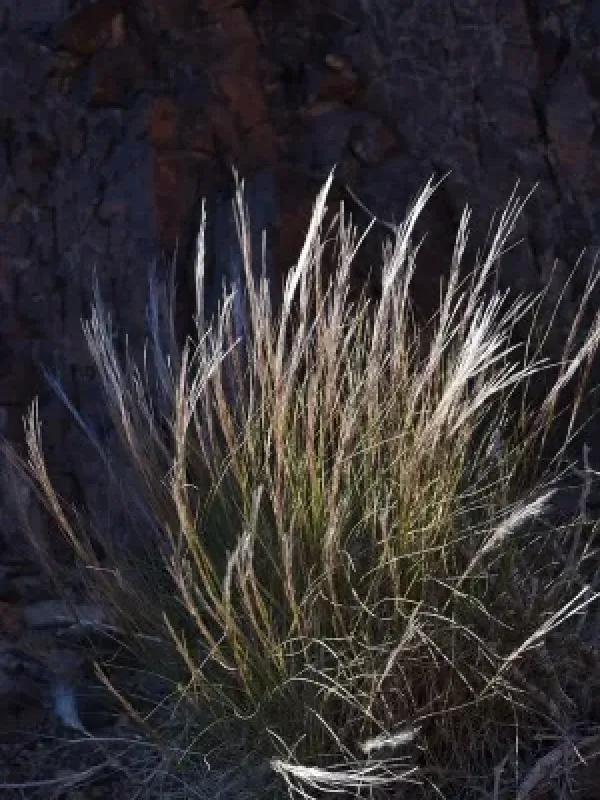
Botanically, it forms dense clumps, with a deep and intricate root system designed to anchor the plant in loose sand and maximize nutrient uptake. The leaves are characteristically narrow, reducing water loss through transpiration.
The cultural requirements are focused on well-drained soils, specifically sandy or rocky textures. It thrives in soils with low fertility levels and is notable for its salinity tolerance, making it a candidate for rehabilitating degraded land.
Economically, it is valued as an essential forage source for livestock, particularly in remote desert regions where camels and goats rely on this species for survival during seasons when other vegetation is scarce.
Main diseases and pests
The primary threats to Stipagrostis raddiana are related to excessive overgrazing and land degradation. When pressure from livestock exceeds the recovery rate of the grass, the soil protection mechanism is lost.
The species is rarely affected by typical agricultural pathogens, given its niche habitat. However, waterlogging remains a risk, as it can lead to root rot if the desert soil does not drain adequately during rare flooding events.
Pests such as locusts and grasshoppers represent the main biotic threats, as they can consume large quantities of foliage during mass migration periods. These events are usually cyclical and natural.
Invasive weed competition is generally low in the plant's native habitat due to its superior adaptation to extreme heat and drought. However, any modification in the irrigation landscape could potentially shift this balance.
Sustainable management involves implementing rotation grazing systems that prevent the depletion of the plant's biological reserve. Protecting the soil structure is fundamental to maintaining the density of this forage grass.